May 7, 2026
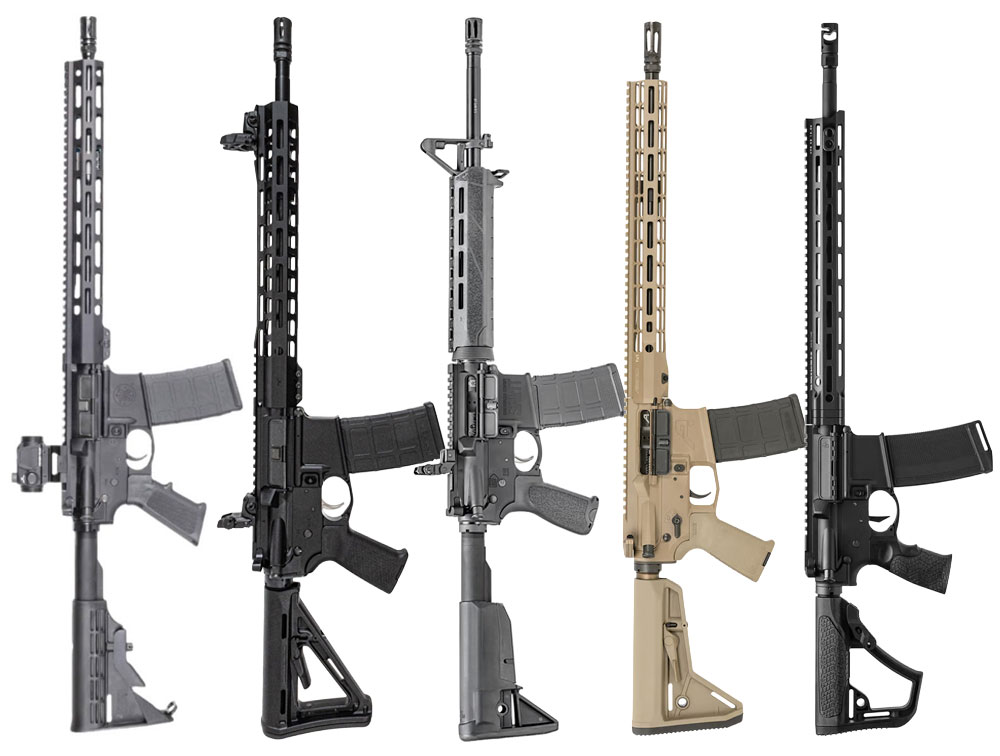
The AR-15 is the most popular rifle in America for a reason — it's modular, accurate, lightweight, low-recoil, and adaptable to everything from home defense to competition to hunting. But walking into a gun shop or scrolling online for your first AR can be overwhelming. There are hundreds of manufacturers, thousands of configurations, and enough acronyms to fill a dictionary.
This guide cuts through the noise. We'll cover what to look for, what to avoid, and which specific rifles are worth your money at every price point in 2026.
Before we get to specific rifles, here's what actually matters when you're buying your first AR.
Caliber: Start with 5.56 NATO/.223 Remington.
A rifle chambered in 5.56 NATO will safely fire both 5.56 and .223 Remington ammunition. This gives you the widest ammo selection and the lowest cost per round for centerfire rifle shooting. Other calibers (6.5 Grendel, .300 Blackout, 6mm ARC) are great for specific purposes, but 5.56 is where every beginner should start.
Barrel length: 16 inches.
A 16-inch barrel is the standard for a rifle-length AR-15 — it's the shortest barrel length that doesn't require NFA registration as a short-barreled rifle. It provides full velocity from 5.56 ammunition, balances well, and is legal in all 50 states without additional paperwork.
Gas system: Mid-length.
The gas system determines where the gas port sits on the barrel. A mid-length gas system on a 16-inch barrel is the sweet spot — it produces softer recoil and less wear on internal parts compared to a carbine-length system. Most quality manufacturers have standardized on mid-length for 16-inch barrels.
Furniture: Whatever feels good.
The stock, grip, and handguard are the most frequently upgraded parts on any AR. Don't overthink the factory furniture on your first rifle — you'll likely swap it eventually. What matters is that the stock locks solidly, the grip feels comfortable, and the handguard doesn't get uncomfortably hot during sustained fire.
What to skip for now:
Free-float handguards, adjustable gas blocks, ambidextrous controls, match triggers, and premium barrel coatings are all nice-to-haves that you don't need on your first rifle. Learn to shoot the platform first. Upgrade later when you know what you actually want.
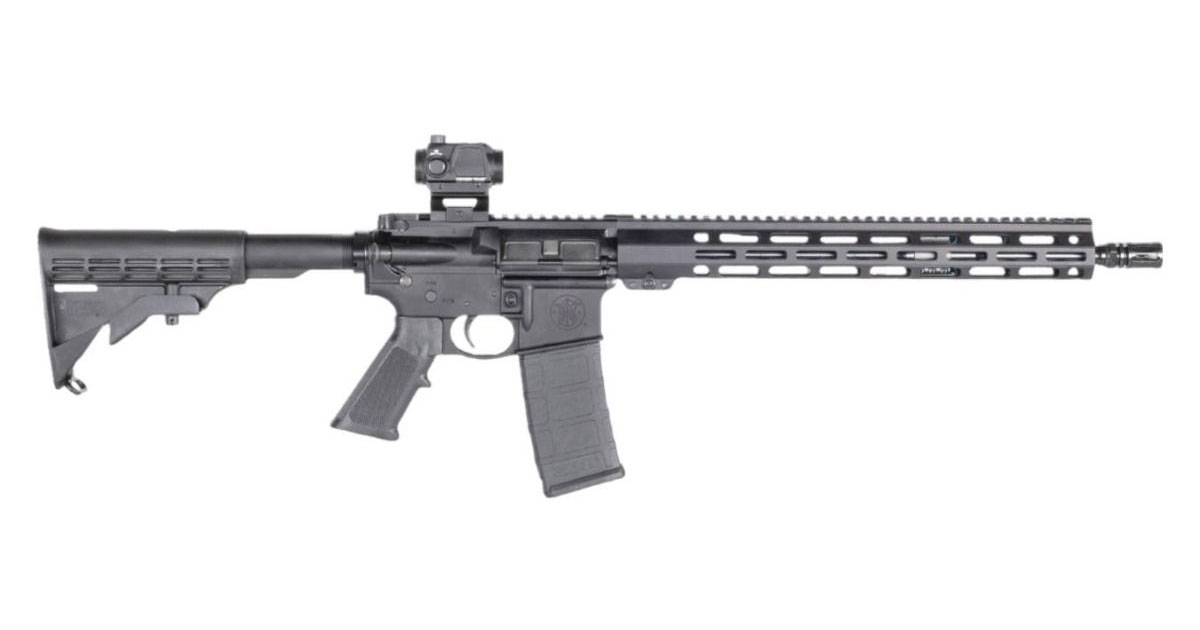
MSRP: $699 (street price typically $599–649)
Barrel: 16" 4150 CMV, 1:8 twist, Armornite finish
Handguard: M-LOK free-float
Furniture: Magpul MOE stock and grip
Sights: None included — flat top Picatinny rail
The M&P15 Sport III is the rifle we hand to people who ask "what should I buy first?" Smith & Wesson has been building ARs for nearly two decades, and the Sport III represents the best value they've ever offered. You get a chrome-lined barrel, a free-float M-LOK handguard, Magpul furniture, and S&W's reliability — all for around $600 at most retailers.
The Sport III doesn't come with iron sights, so budget $50–80 for a set of Magpul MBUS flip-up sights. That's still an outstanding complete rifle for under $700.
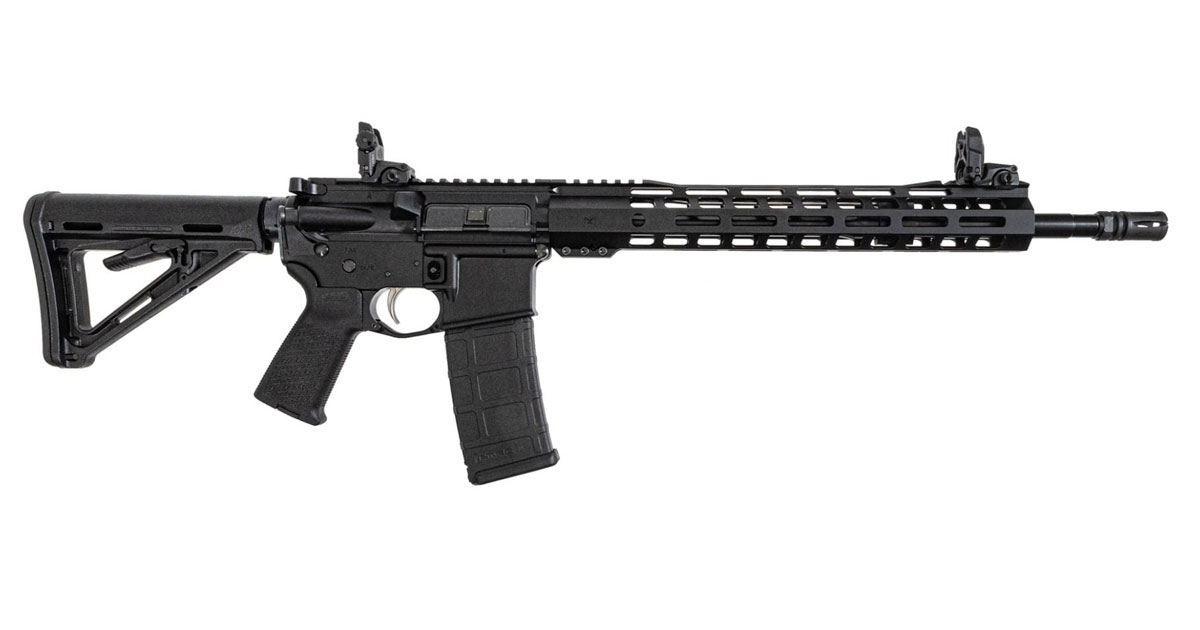
MSRP: $499–599 (varies by configuration)
Barrel: 16" 4150 CMV, 1:7 twist, nitride finish
Handguard: M-LOK (varies by model)
Furniture: Magpul MOE on most models
PSA has made its name selling more ARs at lower prices than anyone else in the industry. The PA-15 is their bread-and-butter rifle, and it delivers everything a beginner needs at the lowest price point from a major manufacturer. The fit and finish won't match a $1,500 rifle, but the reliability and accuracy are there.
PSA also sells complete upper and lower receivers separately, which makes them the go-to choice if you want to build your first AR rather than buy one complete. For our step-by-step guide on that, check out How to Build an AR-15: Beginner's Guide.
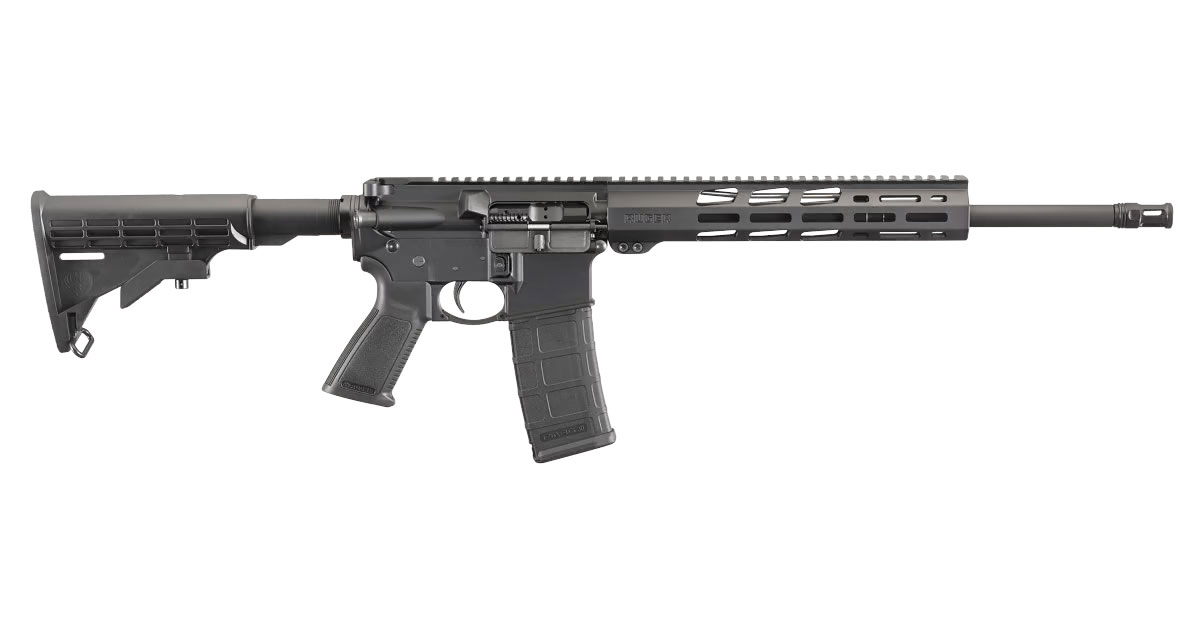
MSRP: $699 (street price typically $599–649)
Barrel: 16.1" cold hammer-forged, 1:8 twist
Handguard: M-LOK free-float (newer models)
Furniture: Magpul MOE
Ruger's AR-556 has been a staple of the beginner market for years. The cold hammer-forged barrel is a standout at this price point — most competitors use button-rifled barrels, which are fine, but hammer-forged barrels are generally more durable and longer-lasting. The Ruger name also carries weight for resale value and customer service.
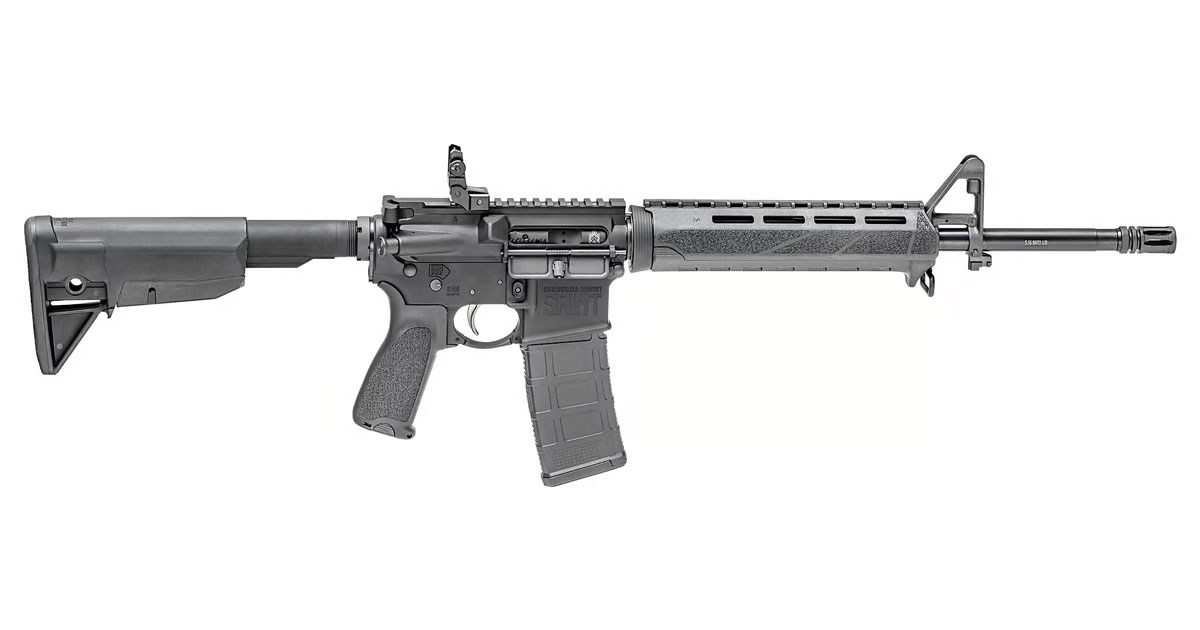
MSRP: $849–999 (varies by configuration)
Barrel: 16" CMV, Melonite finish, 1:8 twist
Handguard: Free-float M-LOK
Trigger: Nickel boron-coated single-stage
Furniture: Bravo Company stock and grip
The SAINT series bridges the gap between budget and premium. The nickel boron-coated trigger is noticeably smoother than a standard mil-spec trigger, the Bravo Company furniture is a real upgrade over the Magpul MOE found on budget rifles, and the overall fit and finish reflect the higher price point.
The SAINT is available in multiple configurations including a pistol version, an SBR-ready version, and the SAINT Edge series at the top end. For a beginner who wants to buy once and not think about upgrades for a long time, the standard SAINT rifle is an excellent choice.
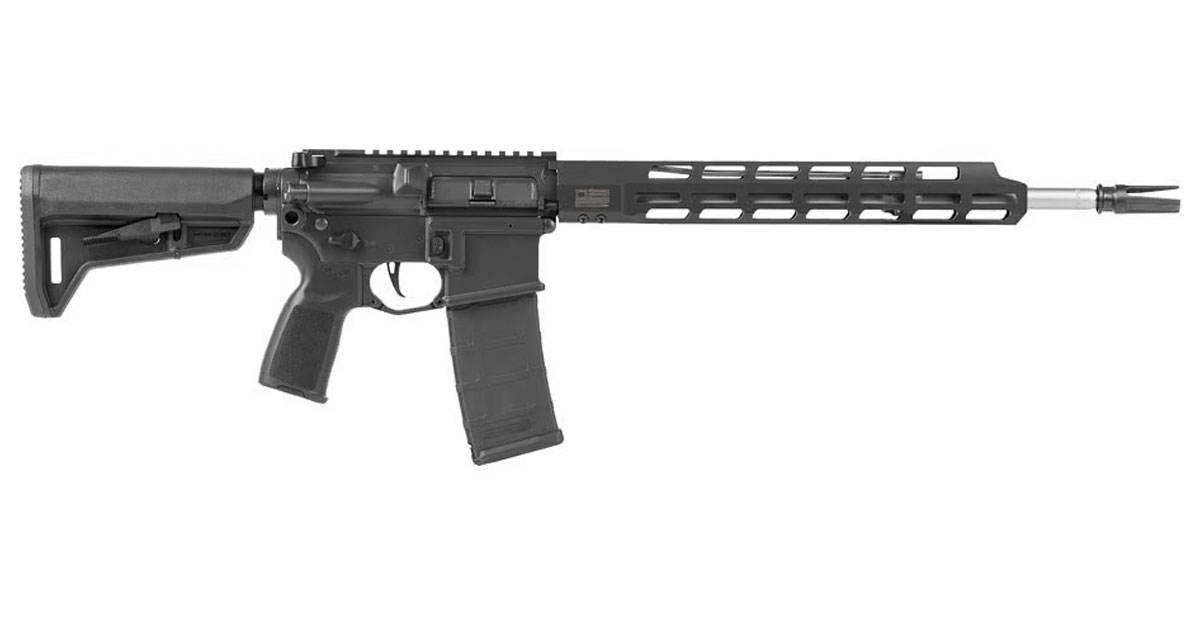
MSRP: $949–1,099
Barrel: 16" stainless steel, 1:8 twist, nitride finish
Handguard: Free-float M-LOK
Trigger: Enhanced Polaris single-stage
Furniture: Magpul SL-K stock, SIG pistol grip
SIG's M400 Tread brings the SIG Sauer name and engineering to the mid-range AR market. The stainless steel barrel and enhanced trigger are meaningful upgrades over budget options. The Tread also features a QD-compatible stock, ambidextrous magazine release and bolt catch, and a lightened free-float handguard.
SIG's customer service and parts support are top-tier, and the Tread has earned a strong reputation since its introduction. If you want a mid-range AR from a major defense contractor with a proven track record, this is it.
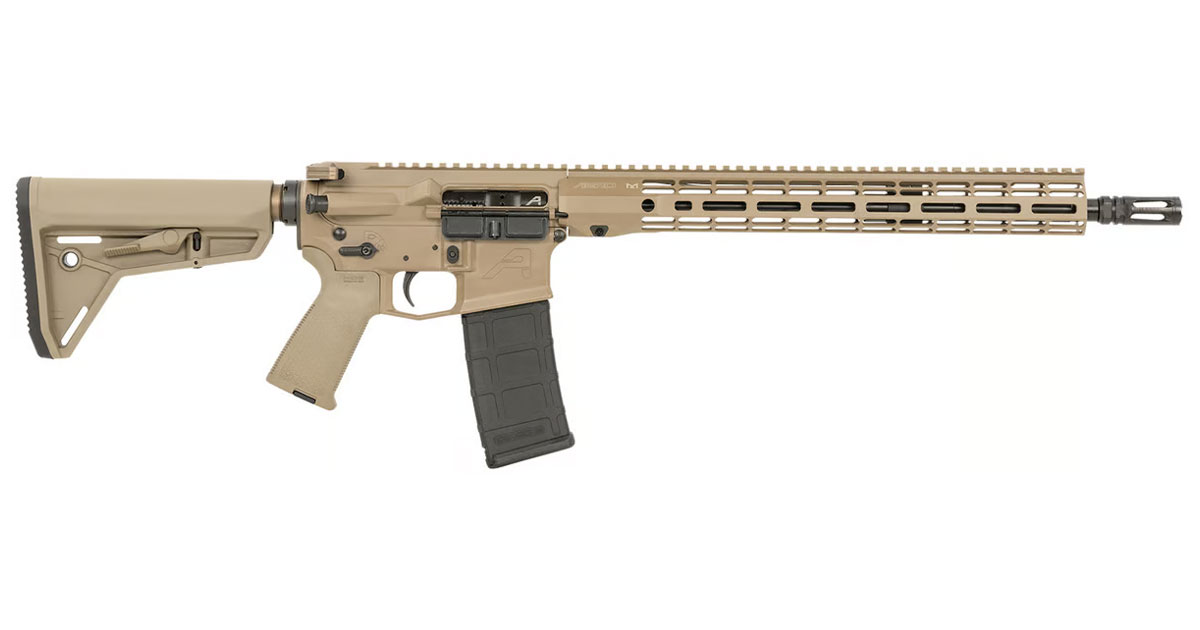
MSRP: $899–1,099 (complete rifle)
Barrel: 16" 4150 CMV or .223 Wylde, various profiles
Handguard: Aero ATLAS M-LOK free-float
Trigger: Mil-spec (easily upgraded)
Aero Precision occupies a unique space — they manufacture receivers and parts for dozens of other AR brands while also selling complete rifles under their own name. The M4E1 features Aero's enhanced upper and lower receivers with a threaded-in roll pin design that makes assembly cleaner, an integrated trigger guard, and a flared magwell.
For the builder-minded beginner, Aero Precision is the platform to grow with. Their parts quality is excellent, compatibility with aftermarket components is universal, and pricing is fair. You'll find Aero receivers inside rifles costing twice as much from other brands.
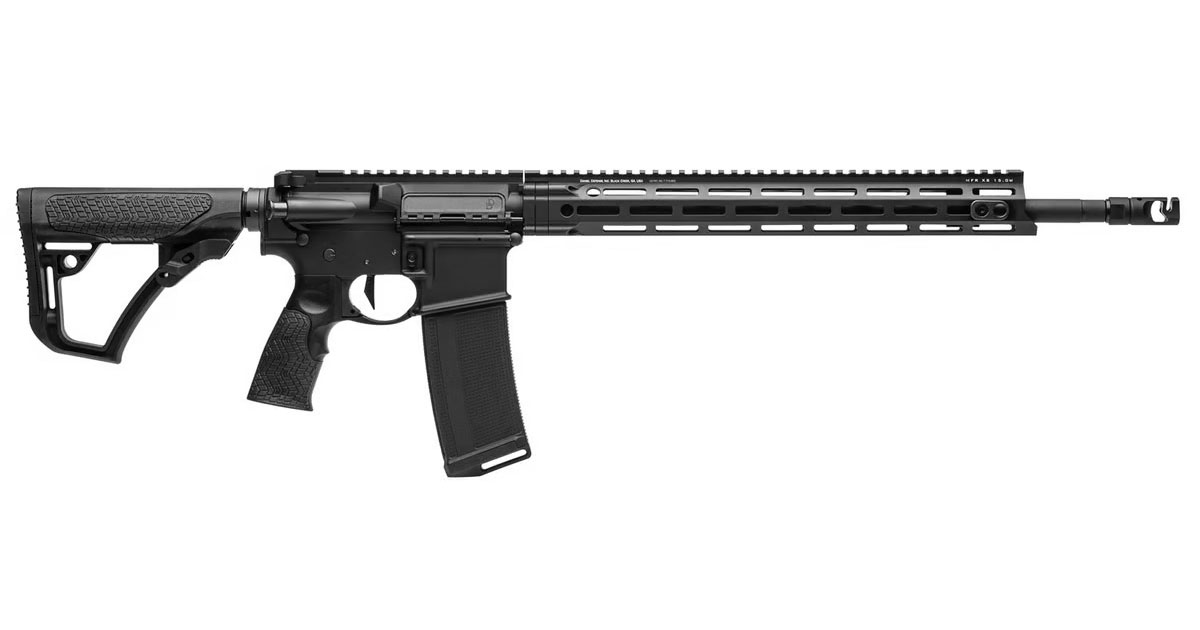
MSRP: $1,929
Barrel: 16" cold hammer-forged, chrome-lined, 1:7 twist, Government profile
Handguard: DD MFR XS M-LOK free-float, 15"
Trigger: Mil-spec (DD improved)
Furniture: DD stock and pistol grip with Soft Touch overmolding
Daniel Defense is the standard by which other AR manufacturers are measured. The DDM4 V7 is their flagship — a rifle you can run hard, abuse, neglect, and it'll keep shooting. The cold hammer-forged barrel is built to military spec and will deliver accuracy well past the point where most shooters will ever test it.
Is a DDM4 twice as good as a $900 rifle? No. But it's meaningfully better in ways that matter over thousands of rounds: barrel life, parts durability, fit consistency, and the confidence that comes from knowing your rifle is genuinely built to the highest standard available in a production gun.
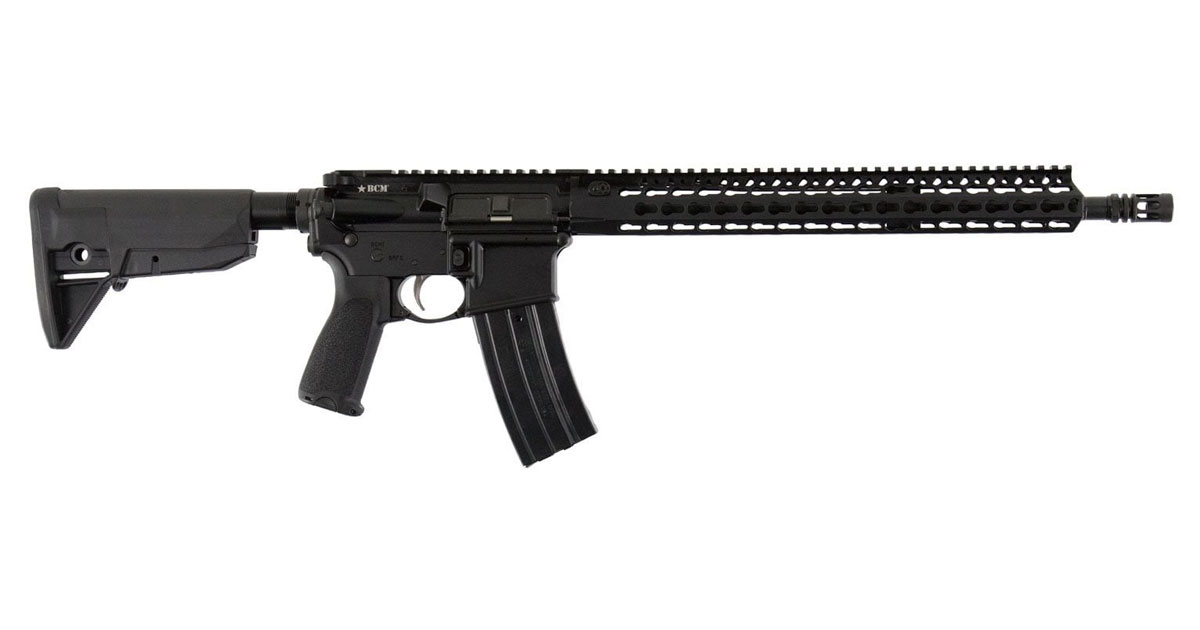
MSRP: $1,499–1,699
Barrel: 16" ELW (Enhanced Light Weight) or Government profile
Handguard: BCM MCMR M-LOK free-float
Trigger: BCM PNT (Polished Nickel Teflon)
BCM builds rifles for professional end-users and serious recreational shooters. The RECCE-16 is their general-purpose carbine — lighter than the DD V7 thanks to the Enhanced Light Weight barrel profile, with a buttery-smooth PNT trigger that's one of the best mil-spec-format triggers available.
BCM doesn't do marketing hype. They build rifles, they test them harder than you'll ever use them, and they ship them. The RECCE-16 is one of the most recommended rifles in professional shooting circles for a reason.
Building an AR-15 from parts is one of the most rewarding projects in the firearms world. It teaches you how every component works, gives you complete control over your parts selection, and often saves money compared to buying a comparable complete rifle.
The process is simpler than most people think — the lower receiver requires only basic tools and about an hour of your time. The upper receiver can be bought pre-assembled (which we recommend for beginners) or built with a few additional tools.
We wrote a complete walkthrough for first-time builders: How to Build an AR-15: Beginner's Guide Part 1. Start there if the build route interests you.
Once you have the rifle, here are the first things to buy — in order of priority:
Sights or optic.
Your rifle needs an aiming system. A set of Magpul MBUS flip-up iron sights ($60–80) will get you started. When you're ready for an optic, a quality red dot (Sig Romeo 5, Holosun 403B, or Vortex Crossfire) in the $120–200 range will transform your shooting. Don't spend $500 on a rifle and $50 on an optic — it's the wrong place to cut corners.
Ammunition.
Buy in bulk. For range training, 55-grain or 62-grain FMJ brass-cased ammunition from Federal, Winchester, PMC, or Fiocchi is the standard. Budget roughly $0.40–0.55 per round at current prices. Buy at least 500 rounds to start.
Magazines.
Your rifle probably came with one. Buy at least 4 more. Magpul PMAGs are the industry standard at $10–13 per magazine. They're the best value in the AR-15 world.
Rifle case or bag.
A soft case from Savior Equipment or Condor in the $40–60 range will protect your rifle during transport. Hard cases from Pelican or Plano are better for travel and long-term storage.
Hearing and eye protection.
If you don't already own them, electronic ear muffs (Howard Leight Impact Sport at ~$50) and ANSI-rated shooting glasses are mandatory.
Cleaning kit.
A basic AR-15 cleaning kit from Real Avid or Otis runs $25–40 and includes everything you need. Clean your rifle after every range trip for the first year — you'll learn the platform inside and out.
For a deeper dive on pistol grips, check out our Best AR-15 Pistol Grips.
What is the best AR-15 for a beginner?
The Smith & Wesson M&P15 Sport III offers the best combination of quality, reliability, and value for a first-time AR buyer. At around $600, it gives you everything you need and nothing you don't. The Ruger AR-556 and PSA PA-15 are also excellent choices in the same price range.
How much should I spend on my first AR-15?
$500–700 gets you a reliable, accurate rifle from a reputable manufacturer. $800–1,200 gets you meaningful upgrades in trigger quality, barrel life, and overall refinement. Above $1,200 you're paying for premium materials and build quality that matter most to high-volume shooters and professionals. For a first rifle, the $600 range is the sweet spot.
Is an AR-15 good for home defense?
Yes. A 5.56 AR-15 with proper defensive ammunition (Hornady TAP, Federal Fusion, Speer Gold Dot) is one of the most effective home defense weapons available. The low recoil, high capacity, ease of use, and ability to mount a weapon light and optic make it superior to a shotgun or handgun for many home defense scenarios. One common concern — overpenetration — is actually less of an issue with 5.56 than with most handgun calibers and shotgun slugs, as lightweight 5.56 projectiles tend to fragment and lose energy faster after hitting barriers.
AR-15 vs. AK-47 for beginners?
The AR-15 is the better choice for most American beginners. Ammunition is cheaper and more available in 5.56, the aftermarket is exponentially larger, recoil is lighter, accuracy is generally better, and the ergonomics are more intuitive. The AK platform has its own strengths (durability, simplicity), but the AR-15 is a better learning platform.
Do I need to clean my AR-15 after every use?
For a beginner, yes — clean it every time you shoot for at least the first year. This teaches you how the rifle works, helps you catch any issues early, and builds good habits. Once you know your rifle well, you can extend cleaning intervals. Modern AR-15s are reliable enough to go thousands of rounds between cleanings, but there's no downside to keeping it clean.
Can I hunt with an AR-15?
Yes, with the right caliber and ammunition. The 5.56/.223 is legal for varmints and predators in all states and for deer in many states (check your local regulations). For larger game, AR-15s chambered in 6.5 Grendel, .350 Legend, .450 Bushmaster, or 6mm ARC are purpose-built for hunting applications.


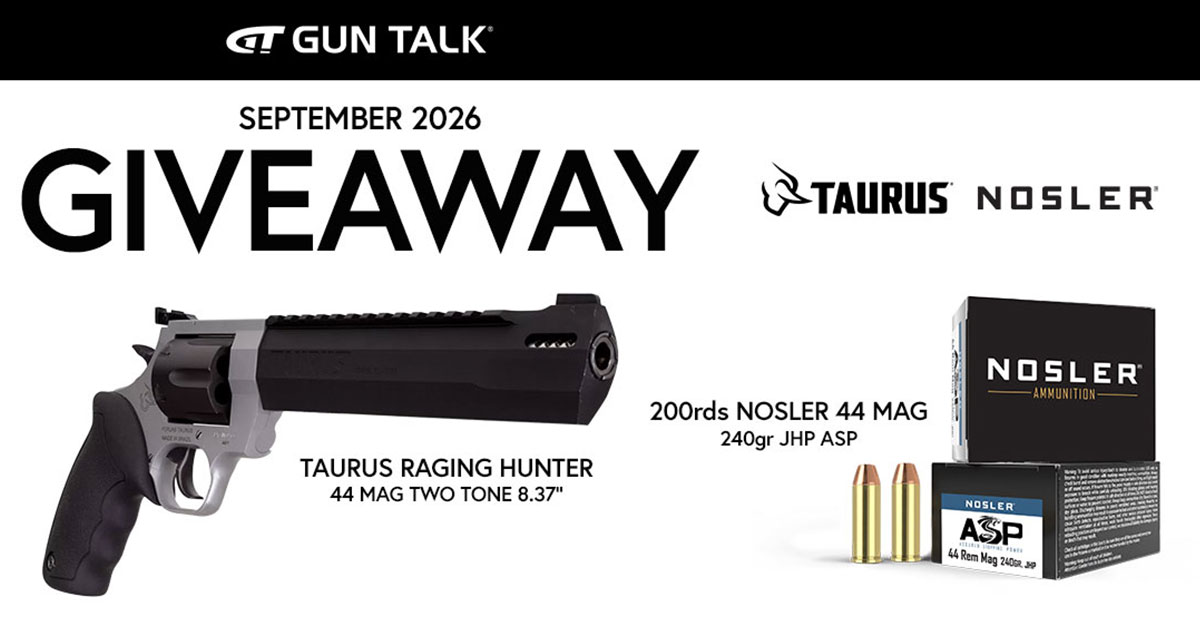
Gun Talk Giveaway
One lucky winner will bring home:
Open to U.S. residents 21+ only. Void where prohibited.