August 6, 2026
On August 5, 2026, a federal judge in Texas did something no court has done in the ninety-two years since the National Firearms Act became law: he ruled that the registration scheme at the heart of it is unconstitutional.
Judge James Wesley Hendrix of the U.S. District Court for the Northern District of Texas issued a 66-page opinion holding that the NFA's regulatory provisions cannot stand for items Congress no longer taxes. He permanently enjoined the ATF from enforcing registration requirements, Form 1 and Form 4 applications, fingerprinting mandates, and photograph requirements against the plaintiffs, their members, and their customers.
This is the most significant blow the NFA has taken since 1934. It's also narrower than a lot of the headlines suggest. Here's the full picture.
The National Firearms Act was never, technically, a gun ban. In 1934 Congress didn't believe it had the authority to outlaw machine guns and suppressors outright, so it did the next best thing: it taxed them at $200 a pop — roughly $4,700 in today's money — and built a registration system around collecting that tax.
The Supreme Court blessed this arrangement in 1937 in Sonzinsky v. United States. The Court's reasoning was straightforward: Congress has the power to tax, the NFA is a tax, and the registration requirements exist to make sure the tax gets paid. Courts don't second-guess Congress's motives in levying a tax, even when the practical effect is regulatory.
That logic held for eighty-eight years. Then Congress pulled the leg out from under it.
The One Big Beautiful Bill Act, signed July 4, 2025, dropped the transfer and making taxes on most NFA items — suppressors, short-barreled rifles, short-barreled shotguns, and AOWs — to zero dollars, effective January 1, 2026. Machine guns were left alone.
Second Amendment groups saw the opening immediately. If the NFA's constitutional foundation is the taxing power, and there is no longer any tax being collected on these items, then what exactly is holding up the registration requirement?
Judge Hendrix's answer: nothing. Because the NFA no longer generates revenue from these items, he wrote, its regulatory provisions can't be justified under the taxing power. And when the government argued the Commerce Clause could serve as an alternative basis, the court rejected that too — finding nothing in the statute's text, structure, or history suggesting Congress invoked any authority other than taxation when it wrote these provisions.
The court's bottom line was that fixing the NFA is Congress's job, not a judge's.
This was a combined ruling covering two lawsuits.
Silencer Shop Foundation v. ATF (No. 6:25-CV-056) was filed shortly after the OBBBA was signed. Plaintiffs include the Silencer Shop Foundation, Gun Owners of America, Gun Owners Foundation, Palmetto State Armory, SilencerCo Weapons Research, B&T USA, the Firearms Regulatory Accountability Coalition, and individual plaintiff Brady Wetz.
Fifteen states joined as plaintiffs: Alaska, Georgia, Idaho, Indiana, Kansas, Louisiana, Montana, North Dakota, Oklahoma, South Carolina, South Dakota, Texas, Utah, West Virginia, and Wyoming.
Jensen v. ATF (No. 6:26-CV-227) brought a parallel challenge with Texas gun owners John Jensen, Jeremy Neusch, and David Lynn Smith, along with Texas FFL Hot Shots Custom, the Texas State Rifle Association, the FPC Action Foundation, and the Citizens Committee for the Right to Keep and Bear Arms.
Defendants are Acting Attorney General Todd Blanche, the Department of Justice, and ATF Director Robert Cekada.
Worth noting for anyone inclined to dismiss this as judge-shopping: Hendrix is a former U.S. Attorney who was originally nominated to the federal bench by President Obama in 2016. That nomination expired without a Senate vote. President Trump renominated him in 2019, and he was confirmed 89-1.
If the injunction takes effect as written, covered parties buying a suppressor, SBR, or SBS would face:
No Form 4 or Form 1. No application submitted to the ATF, no approval to wait on.
No registration. The item doesn't get entered into the National Firearms Registration and Transfer Record.
No fingerprints or photographs. Those requirements are enjoined along with the rest.
No wait. A standard 4473 and NICS check at the dealer counter — the same process as buying a rifle — and you walk out with it.
In practical terms, that would move these items from Title II treatment to something functionally resembling Title I treatment, at least for the people the injunction covers.
This is where a lot of the online commentary has gotten ahead of itself. Read carefully.
It does not touch machine guns. Congress left the $200 transfer tax in place for machine guns in the OBBBA. The tax survives, the Sonzinsky logic survives, and nothing in this ruling disturbs the Hughes Amendment or the machine gun registry.
It does not apply nationwide. This is a ruling from one of 94 federal district courts. It binds the parties before that court — the plaintiff organizations, their members, and their customers. It does not automatically change the law for every gun owner in America. If you are not covered by the injunction, the ATF's position is that the existing process still applies to you.
It does not repeal the NFA. The statute is still on the books. What the court did was enjoin enforcement of specific regulatory provisions as applied to untaxed items. The Act itself remains law until Congress changes it or an appellate court says otherwise.
It does not override state law. Suppressors remain illegal for private citizens in California, Delaware, Hawaii, Illinois, Massachusetts, New Jersey, New York, Rhode Island, and the District of Columbia. A federal court cannot rewrite state statutes. Short-barreled rifle and shotgun restrictions vary by state as well.
It is not in effect yet. Hendrix stayed his own injunction for seven days to allow the government to seek relief at the appellate level. If nothing changes, the order takes effect around August 12, 2026.
Gun rights organizations celebrated immediately.
GOA Senior Vice President Erich Pratt characterized the decision as a historic Second Amendment victory, arguing the federal government can't maintain a gun registry after Congress eliminated the tax that justified it.
Aidan Johnston, GOA's Director of Federal Affairs, tied the win directly to the legislative work that preceded it — noting that eliminating the tax last year set up exactly this outcome.
Alan Gottlieb, chair of the Citizens Committee for the Right to Keep and Bear Arms, said the group expects the reasoning to carry over into related litigation brought by its sister organization, the Second Amendment Foundation.
The Silencer Shop Foundation, lead plaintiff in the primary case, framed it bluntly: the tax stamp was never the hard part. The registration was. And the registration is what fell.
The ball is now in the Trump administration's court, and there are essentially two paths.
The government appeals. This is the widely expected outcome — DOJ typically defends federal statutes even when the administration is politically sympathetic to the challengers. An appeal goes to the Fifth Circuit, which has been among the more receptive federal appellate courts to Second Amendment claims in recent years. That process takes months at minimum, and a Supreme Court petition beyond that would add a year or more.
The government accepts the ruling. Less likely, but not impossible given the current administration's posture on gun policy. If DOJ declines to appeal, the practical question becomes whether ATF administratively extends the ruling's logic beyond the named parties — and whether suppressors, SBRs, and SBSs get reclassified in a way that applies to everyone.
There's also a third track running in parallel: the plaintiffs have indicated they intend to go back to court seeking to broaden the injunction's scope beyond the currently covered parties.
Don't cancel your pending Form 4. If you have an application in process and you aren't clearly covered by this injunction, pulling it could leave you worse off than where you started. Wait for clarity.
Don't build an SBR on the assumption the law changed. Manufacturing a short-barreled rifle without an approved Form 1 is a federal felony if you're not covered by the injunction. Verify your status before you cut a barrel or pin a stock.
Check your state law. The federal picture may be shifting, but state restrictions are unaffected. Nine states and D.C. still prohibit suppressor ownership outright.
Watch the seven-day window. The injunction is stayed until roughly August 12. What the DOJ does in that window will tell you a lot about where this is headed.
Talk to your dealer. Retailers and FFLs covered by the ruling will have the clearest picture of how they intend to handle transfers once the stay lifts. Policies will vary, and some dealers will move cautiously until appellate questions are settled.
Understand who's covered. The injunction reaches the plaintiff organizations, their members, and their customers. That includes GOA members and customers of Silencer Shop, Palmetto State Armory, SilencerCo, and B&T USA. Whether joining one of those organizations after the ruling extends coverage to you is an open legal question — one that hasn't been tested and could go either way. Don't treat a membership card as a legal shield until a court says it is.
Whatever happens on appeal, something meaningful just occurred. For ninety-two years, the NFA's registration scheme sat on a foundation nobody could dislodge — because the tax was real, and the Supreme Court said the tax justified the paperwork.
Congress removed the tax. A federal judge has now said the paperwork can't survive without it.
That's not a technicality. That's the structural argument gun rights litigators have been building toward since the moment the One Big Beautiful Bill Act was signed. Whether it holds up through the Fifth Circuit and potentially the Supreme Court is a genuinely open question. But the argument is out of the theoretical stage and into the courts, with a written opinion behind it.
We'll be following this closely.
Sources: Silencer Shop Foundation v. ATF, No. 6:25-CV-056 and Jensen v. ATF, No. 6:26-CV-227 (N.D. Tex., Aug. 5, 2026); Gun Owners of America; Guns.com; Silencer Shop Foundation.
This article is reporting on pending litigation and is not legal advice. Court orders can be stayed, modified, or reversed on appeal. Consult an attorney familiar with federal firearms law before making decisions based on the current status of this case.

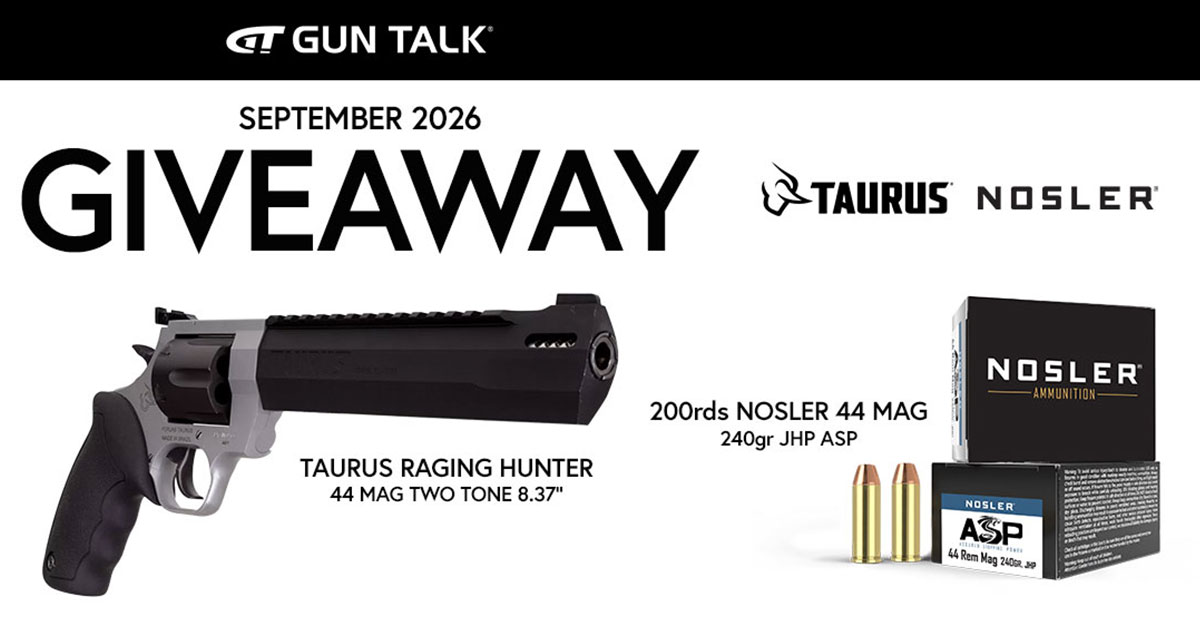
Gun Talk Giveaway
One lucky winner will bring home:
Open to U.S. residents 21+ only. Void where prohibited.

