June 12, 2026
Kevin "KJ" Jarnagin
If you’ve been around NRL Hunter competition long enough, you know the bino game has changed. Completely. It doesn’t seem that long ago, competitors were ranging with a handheld rangefinder, using hard d.o.p.e cards and running a separate ballistic app on their phone. The emergence of ballistic rangefinding binoculars has collapsed all of that into a single tool, and the race to produce the most capable one has given shooters options that would have seemed like science fiction not long ago. We’re talking military grade options for the everyday guy like me.
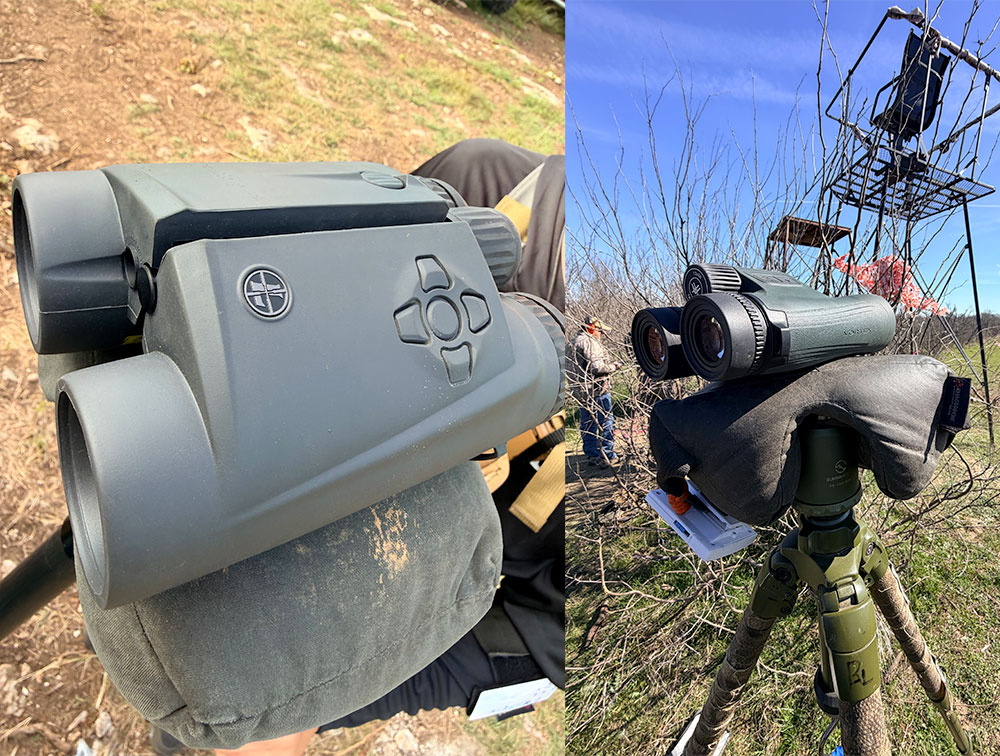
This season, I’ve been running two of the most talked-about rangefinding binos in the NRL Hunter world: the new Vortex Talon HD 10K 12x50 and the Leupold BX-6 Range HD. These aren’t budget optics — they’re both serious, premium-priced tools built specifically for shooters who need accurate ranging, fast ballistic solutions, and glass clear enough to actually identify what they’re ranging. I’ve had significant time behind both. Here’s what I’ve found.
Vortex came out swinging with the Talon HD 10K. The name tells the story: 10,000-yard maximum ranging capability. That’s not a typo, and yes, it sounds absurd until you’re on a stage with a distant steel piece at an unknown distance and the confidence of a 10K-yard laser engine behind you matters enormously. The 12x50 configuration gives you substantial light-gathering capability in a package that’s chunky but manageable in the field.
The Talon’s ballistic brain runs on Vortex’s integrated GeoBallistics Solver — the same engine used by serious long-range shooters through the standalone GeoBallistics app — embedded directly in the binos. On-board environmental sensors feed real-time temperature, pressure, humidity, compass bearing, and inclination data into the solver, which spits back wind and drop solutions on a red OLED active-matrix display that is bright, customizable, and auto-leveling. I enjoyed the auto-level because I’m not always 100% on leveling before I begin the process.
You can also pair the Talon with the broader Vortex Relay ecosystem, connecting wirelessly to the Ace weather meter and future Relay devices for a fully integrated data flow across your shooting system. I’ve been running the ACE Weather Meter for the entire year and am thoroughly convinced this will never leave my side. However, that is another article for another day.
Leupold’s BX-6 Range HD is the Oregon company’s most ambitious rangefinding binocular to date, and it makes a compelling case on paper before you ever look through it. The headline feature is being the first rangefinding binocular to integrate Hornady’s 4DOF ballistic calculator — a distinction that matters more than it might initially seem, which we’ll get into shortly.
I do find the 4DOF system accurate and easy to navigate. Please, before you read further make sure all your data changes go through the Leupold Control App. This is where you build out your data for sharing your gun profile to the BX-6 Range HDs.
As a 10x42 platform, the BX-6 is more compact and lighter than the Vortex 12x50, obviously. The glass is described by Leupold as the best they’ve ever produced for a rangefinding bino, with serious attention paid to light transmission, glare reduction, and low-light performance. The rangefinding engine is capable out to 6,000 yards in long-range mode, 2,000+ yards on deer-sized game, and 3,000 yards on trees.
I said it once, but I’ll say it again. When the binos feed me the wrong info it was because I was attempting to change within the 4DOF app instead of the Control App. All ballistic profiles and settings are managed through the Leupold Control App via Bluetooth, with GPS precision pinning compatible with onX Hunt, HuntStand, Google Maps, Apple Maps, and more.
| Category | Vortex Talon HD 10K 12x50 | Leupold BX-6 Range HD |
|---|---|---|
| Magnification | 12x | 10x |
| Objective | 50mm | 42mm |
| Max Range | 10,000 yards | 6,000 yards (LR mode) |
| Animal Range | Not spec’d separately | 2,000+ yards on deer-sized game |
| Ballistic Engine | Vortex GeoBallistics Solver | Hornady 4DOF |
| Profiles | Customizable presets + user-built | Up to 10 profiles via app |
| App/Connectivity | GeoBallistics App + Vortex Relay | Leupold Control App (iOS/Android) |
| Display | Active matrix red OLED | In-bino display + app interface |
| Env. Sensors | Temp, pressure, humidity, compass, inclination | Temp, pressure, angle (wind via app) |
| GPS Pinning | No | Yes — onX, HuntStand, Google Maps, Apple Maps |
| Weather Mode | Rain/fog ranging mode | Standard |
| Weight | ~46.8 oz. (w/o battery) | Lighter (10x42 platform) |
| MSRP | $3,799 | ~$4,000 |
| Warranty | Vortex VIP Lifetime | Leupold Lifetime Guarantee |
| Service | Vortex — U.S. warranty service | Leupold — Oregon-based, U.S. service |
This is where the two binos diverge most meaningfully, and it deserves a real conversation rather than a spec sheet bullet point.
GeoBallistics has earned serious credibility in the long-range shooting world as a standalone app before Vortex embedded it in the Talon. The solver handles the standard suite of ballistic inputs — BC, muzzle velocity, scope height, environmental conditions — and integrates them with the Talon’s on-board sensors to produce a firing solution without any external device required. You range, the bino thinks, you get a hold.
The Vortex Relay network is the forward-looking piece of this ecosystem. The Talon connects wirelessly to the Ace weather meter for real-time wind inputs — solving the one limitation of any bino-only system, which is that wind data from a bino-level sensor may not fully represent conditions at target distances. As Vortex expands the Relay product line, the Talon becomes more capable over time through the same connectivity framework.
The Leupold BX-6 is the first rangefinding binocular to run Hornady’s 4DOF — Four Degrees of Freedom — ballistic calculator, and that matters for a specific reason. Traditional ballistic solvers use a ballistic coefficient (G1 or G7 BC) to model a bullet’s flight path. 4DOF replaces that with actual Doppler radar-measured bullet data across the full flight envelope. It models spin drift, aerodynamic jump, and real-world drag characteristics that BC-based solvers approximate. This is what Hornady does for a living so it makes sense that they’re on top of the ballistics side of things.
The practical result, particularly for NRL Hunter competitors shooting Hornady bullets, is that your ballistic solution is derived from the actual measured behavior of your specific bullet — not a generalized model. For non-Hornady bullets without native 4DOF profiles, the app supports custom data entry, and testing has shown accurate solutions even without factory Doppler data. The Leupold Control App manages up to 10 separate profiles, meaning a multi-gun NRL Hunter shooter can keep every rifle’s solution ready to access and switch between them in the field.
“The first rangefinding binocular to run Hornady 4DOF. For NRL Hunter competitors shooting Hornady projectiles, the bullet and the solver are speaking the same language — and that precision shows on steel.”
I’ve only had the Leupold BX-6 through one NRL Hunter match to this point, so take this section with the appropriate sized grain-of-salt. But here’s what I can tell you: it ran clean. Not a single issue. Ranged accurately, the D.O.P.E. was dialed, and the Leupold Control App setup was intuitive enough that I wasn’t fumbling with profile settings between stages. The glass impressed — low-light performance was noticeably strong, and the 10x42 configuration is slightly more manageable in the field than the heavier 12x50 packages.
I found the heads up display, HUD, to be extremely sharp and easily navigable.
The precision pinning feature — which I wasn’t sure I’d actually use in competition — turns out I didn’t use this feature at all. For hunting applications, this feature alone might justify the premium price. I can only imagine being on a hillside and making a cross-canyon shot and upon recovery not knowing where to go. Now, I can pin the last known location and navigate my way to the last known location. Easy peasy.
One match isn’t enough to issue a final verdict on reliability. But the first impression was excellent, and the D.O.P.E. accuracy — which is ultimately what matters on the clock — was right where it needed to be.
The Vortex Talon has been my primary competition bino this season, and the majority of that experience has been genuinely impressive. The 12x glass is excellent — noticeably more magnification than the 10x Leupold, which matters when you’re trying to confirm a hit on a small steel piece at 600+ yards. At the Freestone match, we shot until it was literal dark:30 and the binos had clarity no matter the time of day. I could see just as well in low-light hours as I could at high noon.
The GeoBallistics solver has been accurate and confidence-inspiring across multiple matches. The Relay connectivity with the Ace weather meter adds a meaningful layer of precision to wind inputs that matters at distance.
There are two things I’d flag for anyone considering this bino for competition use, both of which Vortex should know about if they don’t already.
First, the wake-up lag. When you first range a target after the bino has been idle, there’s a brief moment — call it a ‘wake-up’ — before you get a reading. It’s not catastrophic, but it is noticeable when you’re on a stage clock and mentally committed to your ranging process. You learn to accommodate it, but on a tight stage with time breathing down your neck, it costs you a beat. Whether Vortex can address this with a firmware update is worth watching.
“The only real frustration with the Vortex this season: it froze on me mid-stage. On the clock. Had to pull the battery to reset it. Not ideal. At all.”
Second — and this is the one that stings — the Talon froze during a stage at my most recent match. On the clock, in the middle of a stage, the bino went unresponsive. Display read 737 yards (target was no more than 500), no ranging, nothing. I had to remove the battery to reset the unit, at which point it came back to normal and performed without issue. That’s an expensive piece of gear having a software or firmware failure at the worst possible moment. To Vortex’s credit, their VIP warranty is among the strongest in the industry. But a freeze during competition is a problem regardless of warranty coverage, because the warranty doesn’t get you your stage time back. It must be noted, that at this particular match I was my own worst enemy on and off the clock…
Whether this was an isolated hardware issue or indicative of a firmware stability concern is something I’m watching closely. It happened once. Once is enough to note. For NRL Hunter competitors who depend on this bino as their primary ranging and ballistic tool, it’s a real-world performance consideration worth factoring into your decision.
Here’s the honest answer: both of these binos are exceptional tools, and the right choice depends heavily on what you prioritize. Neither is a bad decision. But they’re different enough in meaningful ways that the decision isn’t a coin flip.
“Both are excellent. If reliability under competition pressure is your deciding factor — and it should be — the Leupold has the current edge in my experience. But I’m giving the Vortex more matches before I make a final call.”
The rangefinding binocular market has arrived at a place that was unimaginable even five years ago. The Vortex Talon HD 10K and the Leupold BX-6 Range HD represent the current high-water mark of what you can carry to a firing position — ranging, ballistic solving, environmental sensing, and in the Leupold’s case, GPS target marking, all in one package that weighs about three pounds.
The Vortex is the more ambitious tool on paper, with a 10,000-yard laser engine and a connected ecosystem that keeps growing. The Leupold is the more refined and ballistically sophisticated tool, with Hornady 4DOF doing the heavy lifting on accuracy. Both delivered good D.O.P.E. in my season. One froze on me on the clock. That happened once with the Vortex, and it’s a data point — not a death sentence.
If you’re stepping into this price category for NRL Hunter or backcountry hunting use, know that you are buying genuinely transformative technology. Either bino makes you a more capable shooter in the field. The question is which one fits your shooting ecosystem, your ballistic preferences, and your tolerance for the occasional firmware hiccup on a new product.
More matches to come. More data on the way. Stay tuned.
KJ
Kevin Jarnagin (KJ) hails from Oklahoma but quickly established Louisiana roots after joining the Gun Talk team. KJ grew up as a big game hunter and often finds himself in a different venture often. His early career had him working with one of the finest PR agencies in the outdoor industry – Blue Heron Communications. Before that, KJ molded the minds of business school students at the University of Oklahoma. Quickly learning he had to grow up sometime, KJ dedicated himself to the outdoors no matter what it took.


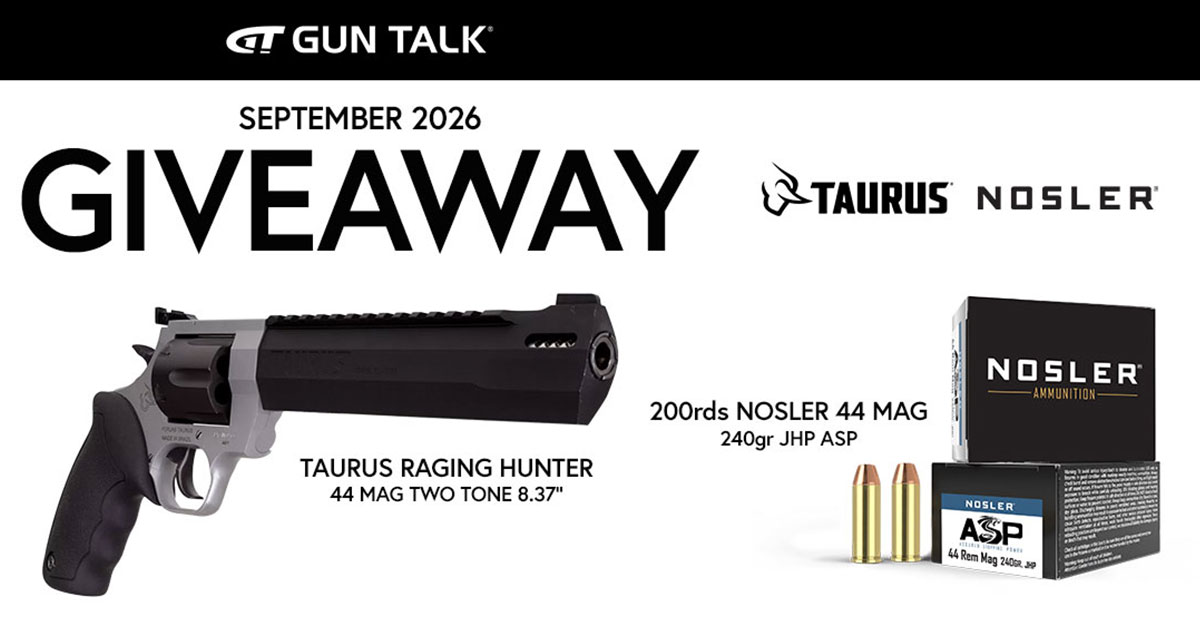
Gun Talk Giveaway
One lucky winner will bring home:
Open to U.S. residents 21+ only. Void where prohibited.