October 22, 2026
Gun Talk Staff
Gun Talk Media Staff — October 22, 2026
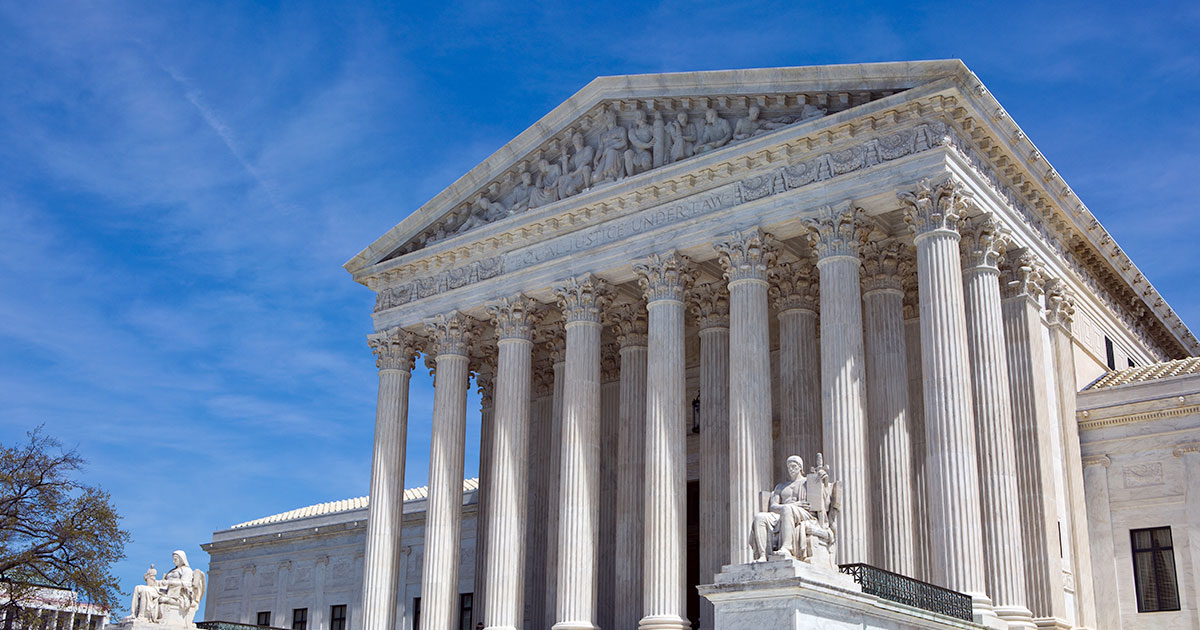
The respondents’ briefs are the government’s formal written case for why states and localities can ban AR-15-platform rifles. A ruling is expected by June 2027, and it will be the most consequential Second Amendment decision since New York State Rifle & Pistol Association v. Bruen in 2022. It could affect assault weapons laws in about a dozen states and the District of Columbia.
| Date | What happened |
|---|---|
| June 30, 2026 | Supreme Court agrees to hear Viramontes and Grant, consolidated. |
| August 28, 2026 | Challengers’ merits brief filed. Core argument: AR-15s are in common use by law-abiding Americans and protected under Heller. |
| September 2026 | Dozens of amicus briefs filed, including the NRA, 27 states and the U.S. Solicitor General, all supporting the challengers. |
| October 21, 2026 | Cook County and Connecticut file their respondents’ briefs. |
| December 2, 2026 | Oral argument at the Supreme Court. |
| By June 2027 | Decision expected. |
Gun Talk covered the case background in The AR-15 Case at SCOTUS Just Got Real.
Both governments make the same core claim. The Second Amendment doesn’t cover every firearm, they say, and AR-15s fall outside it because they are “unusually dangerous.” They argue that popularity doesn’t decide the question, no matter how many AR-15s Americans own.
Connecticut, represented in part by former Solicitor General Elizabeth Prelogar, rejects a common-use-only test. It argues that commonality doesn’t shield a weapon from regulation. Its historical tradition is regulation of weapons with unusually dangerous characteristics compared with their contemporaries. It points to English restrictions on the launcegay, and to American laws on Bowie knives, concealable pistols, slungshots and, in the early twentieth century, fully automatic weapons like the Tommy gun. It also argues that the Court protects stun guns but not machine guns, so something other than popularity must separate them.
“American history is replete with examples of governments banning excessively lethal weapons.”Connecticut respondent brief, Grant v. Higgins, pp. 8–9
Connecticut adds that those weapons were restricted “precisely because they had become so popular that they posed immediate dangers to society.” It also argues that the ban fits the scope of its historical analogues because other firearms remain available.
Cook County argues that common use doesn’t determine constitutional protection and that the ordinance only has to pass Bruen’s historical test. It cites historical laws on Bowie knives, trap guns, armed assemblies and public affray. It argues that self-defense is the baseline purpose protected by the Second Amendment and that AR-15s are rarely used for it. It also describes AR-15s as “readily convertible” to machine guns, a characterization that sits at odds with ATF’s long-standing position separating semiautomatic firearms from machine guns.
The 2022 Bruen decision changed how courts evaluate gun laws. The government bears the burden of showing that a modern restriction is “consistent with this Nation’s historical tradition of firearm regulation.” Public safety arguments and interest balancing are not enough. The Court was also clear that the government doesn’t need a “historical twin.” It must identify a “relevantly similar” historical analogue.
That is the climb for Cook County and Connecticut. They don’t point to a founding-era or Reconstruction-era law banning a commonly owned class of rifles. Their strategy is to argue that the relevant tradition is a principle: governments may restrict weapons that are unusually dangerous, and each era can apply that principle to its own technology.
The challengers filed in August. Their primary argument under Heller is that millions of Americans own AR-15-platform rifles, making them among the most commonly owned rifles in the country, and that this prevalence should be decisive. They argue that the “dangerous and unusual” exception was meant for weapons like short-barreled shotguns and machine guns, not the most popular rifle in America.
On history, they argue that no state or territory before 1900 banned an entire class of commonly owned semiautomatic rifles in civilian hands. The modern assault weapons ban is a late-twentieth-century invention, they say, with no 1791 or 1868 analogue. The Trump administration’s Solicitor General filed an amicus brief supporting the challengers, so the federal government is on record before the Court arguing the bans should fall.
The challengers can now file reply briefs responding to the October 21 filings. Oral argument is December 2 at the Supreme Court. The Solicitor General has asked for time to participate alongside the challengers. A decision is expected by the end of June 2027.
New Jersey has separately asked the Court to review a Third Circuit ruling against its semiautomatic rifle ban and its magazine limit. The state’s petition asks the Court to hold the case until it decides Viramontes and Grant, then grant it, vacate the lower court’s judgment and send it back for reconsideration. That makes Viramontes the case to watch for pending challenges to magazine limits and other feature-based restrictions.
The government’s case is now on paper. Oral argument is December 2.



Gun Talk Giveaway
One lucky winner will bring home:
Open to U.S. residents 21+ only. Void where prohibited.