July 15, 2026
Gun Talk Staff
There are two kinds of gun owners in the world: those who clean their firearms on a consistent schedule with good technique and good products, and those who clean their firearms when something goes wrong. The first group has guns that work when they need them. The second group has stories.
Gun cleaning is not glamorous. It does not generate the excitement of a new optic or the satisfaction of a tight shot group. But it is the maintenance layer that protects the investment underneath every trigger pull — and when that investment is also a defensive tool, it is the maintenance layer that your life may one day depend on.
This guide covers the ‘why’ of consistent cleaning, introduces the Gun Talk team’s experience with BarrelBuddy’s polymer bore cleaning technology as a genuine efficiency upgrade over traditional patches, walks through a caliber-by-caliber breakdown of how BarrelBuddy works, and provides a complete firearm-specific cleaning schedule you can print, post, and actually use.
A dirty firearm is not just an unattractive firearm. It is a mechanically compromised firearm. Carbon fouling builds up in the bore, on the bolt face, in the action, and in the chamber over successive rounds fired. That buildup does specific and measurable things to performance and reliability.
In the bore, carbon fouling reduces the effective diameter of the barrel, increasing pressure behind projectiles and reducing velocity consistency. Copper fouling from jacketed bullets embeds itself in rifling grooves and degrades accuracy over time — not dramatically in a single range session, but cumulatively over hundreds of rounds. In the action, carbon and debris accumulate on rails, bolt carriers, and extractors, increasing friction and reducing the reliability margin of a firearm that was designed with tolerances that assume a reasonably clean operating environment.
For defensive firearms specifically, the stakes of deferred maintenance are highest. A carry pistol cleaned once a year that then develops a failure to extract on the third round of a defensive encounter is not a hypothetical. It is a documented class of incident. The fouling didn’t cause the malfunction — the negligence that allowed the fouling to accumulate did. For a deeper walkthrough of proper technique specifically for carry and defensive pistols, see our full guide on how to clean a handgun.
“A gun that is too dirty to be reliable is a gun that is not ready to defend you. That is not a maintenance inconvenience. It is a safety failure.”
The good news is that modern cleaning products — particularly the switch from traditional patches to compression-fit bore cleaners like BarrelBuddy — have made consistent cleaning faster, easier, and more effective than it has ever been. The barrier to regular maintenance is lower than it has ever been. There is no longer a good excuse for skipping it.
The cleaning patch has been a staple of firearm maintenance since before the Civil War. Cut from cotton or synthetic cloth, threaded through a slotted jag or wrapped around a loop, pushed through the bore with a rod — it works, more or less, and every gun owner has used it. It also has several structural limitations that BarrelBuddy directly addresses.
The fundamental problem is geometry. A cleaning patch is a flat, two-dimensional square. A bore is a three-dimensional cylinder with rifling grooves cut into it. When you push a flat patch through a round bore, the patch makes contact with the highest points of the bore — the lands of the rifling — and partially bridges across the grooves rather than pushing into them. The grooves, which are the areas where carbon and copper fouling most stubbornly accumulate, receive partial and inconsistent contact. Cotton patches also leave behind fiber residue, requiring additional passes to clear. And a patch that has picked up fouling on a first pass carries that fouling back into the bore on a second pass if direction is reversed.
BarrelBuddy bore cleaners are cylindrical polymer plugs manufactured in the United States to precise caliber-specific diameters. The key design principle is simple: a cylinder pushed through a cylinder makes 360-degree contact with the bore wall, including compression into the rifling grooves where the fouling lives. This is the mechanical advantage that flat patches cannot replicate.
The dual-polymer construction — with two distinct material densities in each cleaner — provides both scrubbing action and wiping action in a single pass. The outer surface compresses into the rifling grooves under pressure as it is pushed through with a jag and rod, physically displacing fouling rather than wiping over it. Because BarrelBuddy is disposable, each pass through the bore is made with a clean cleaner, eliminating the recontamination issue of re-using a fouled patch. They are lint-free, leaving no fiber residue to complicate subsequent passes.
| Design | Cylindrical dual-polymer bore cleaner providing 360-degree full bore contact including rifling grooves |
|---|---|
| Construction | American-made │ Dual-stage polymer │ Lint-free │ Disposable after single bore pass |
| Sizes available | .22 caliber through 10-gauge shotgun — comprehensive coverage across rimfire, centerfire handgun, rifle, and shotgun |
| Use method | Thread onto jag and rod; apply solvent to cleaner for solvent pass, run dry for dry pass, apply oil for lubrication pass |
| Availability | BarrelBuddy.com │ Amazon │ Distributed through firearms retailers and distributors |
| Made in | United States of America |
The Gun Talk team has been running BarrelBuddy across a range of platforms — from the centerfire precision rifles we shoot in NRL Hunter competition, to carry pistols, to rimfire trainers, to shotguns. The consistent finding across all of them is the same: the bore comes cleaner, faster, with fewer passes, and with less mess than traditional patch methods.
The efficiency gain is most pronounced on rifles with deeply cut rifling, where traditional patches have always done the worst job of reaching the grooves. A BarrelBuddy pass after a solvent soak on a precision rifle bore removes what would take multiple patch passes to accomplish. For a hunting rifle cleaned in the field after a wet day in the timber, where time and space are limited, that efficiency matters considerably.
The carry pistol application has a specific advantage worth calling out: the no-lint feature. A 9mm carry pistol cleaned with cotton patches will occasionally have visible cotton fibers in the bore and chamber that require a follow-up pass to clear. BarrelBuddy’s polymer construction leaves nothing behind. The bore you see when the cleaner exits is the bore you’ve got.
“The bore you see when the BarrelBuddy exits is the bore you’ve got. No lint, no re-contamination, no second-guessing whether you actually got into the grooves.” — Gun Talk Media field experience
BarrelBuddy’s recommended cleaning protocol is straightforward and efficient. The company’s documentation and the field experience of trainers who use it consistently point to the same three-pass sequence as the standard workflow:
Thread a BarrelBuddy onto a caliber-appropriate jag and rod. Apply your preferred solvent directly to the BarrelBuddy — enough to saturate it without dripping. Push it through the bore from breech to muzzle in a single smooth stroke, maintaining consistent pressure. Do not reverse direction mid-pass. Discard the used cleaner. The solvent saturates and begins breaking down carbon and copper fouling on contact. Allow a dwell time of 3 to 5 minutes for the solvent to work before proceeding to the second pass.
Thread a dry BarrelBuddy onto the jag. Push it through the bore from breech to muzzle, again in a single direction. This pass mechanically removes the loosened fouling that the solvent dwell time has broken down. Inspect the cleaner after the pass — the amount and color of fouling visible on the cleaner tells you how much fouling was present and how effectively the first pass worked. For heavily fouled bores, a second solvent pass followed by a second dry pass may be warranted. For routine post-range cleaning, the two passes typically produce a clean bore.
Apply a light application of your preferred firearms lubricant to a fresh BarrelBuddy. Push it through the bore from breech to muzzle. This deposits a thin, even layer of protective oil across the entire bore surface — true 360-degree coverage including the grooves — protecting against corrosion and leaving the bore properly lubricated for the next range session. For carry firearms, use a very light oil application; excess oil in a bore attracts debris and can compromise chamber pressure on the first round. For storage, a slightly heavier application is appropriate.
The single most common question in gun cleaning is “how often?” The answer varies significantly by firearm type, use pattern, ammunition type, and environment. The schedule below is built around real-world use patterns with honest guidance on minimum maintenance intervals. It assumes the use of quality solvents, lubricants, and BarrelBuddy for bore cleaning.
| Firearm Type | After Each Use | Monthly | Quarterly / Seasonal | Annual Deep Clean |
|---|---|---|---|---|
| Carry Pistol (EDC) | Full field strip, bore clean (BB 3-pass), wipe frame/slide, lubricate rails & barrel hood | Inspect chamber & feed ramp; wipe exterior; check magazine function | Detail strip or armorer inspection; check springs, extractor tension | Full armorer-level inspection; replace springs per manufacturer schedule; ultrasonic clean recommended |
| Home Defense Pistol | Bore clean + wipe down after range use | Function check; inspect for corrosion; light lubrication | Field strip, full clean, lubricate; check ammo in gun (rotate if >6 months old) | Full detail strip; replace defensive ammo; inspect all components |
| Competition Pistol | Full field strip & clean after every match | Inspect trigger group & reset function | Polish feed ramp; check barrel fit; inspect frame rails | Full detail strip; replace high-wear parts; consult match history for round counts |
| Bolt-Action Rifle | Bore clean (BB 3-pass) after range session | Inspect bolt face, extractor, lug recesses; wipe stock | Clean action channels, lubricate bolt body; check scope mount torque | Full disassembly; clean magazine box; inspect barrel crown; stock bedding check |
| Semi-Auto Rifle (AR-15) | BCG clean, bore clean, wipe chamber & upper; light lube | Inspect gas tube area; clean feed ramps | Remove lower, clean FCG area; inspect buffer spring | Full detail strip; replace buffer spring if high round count; inspect barrel extension |
| Hunting Rifle | Bore clean after each hunt, especially in wet conditions | Check for moisture damage, corrosion; wipe exterior | Pre-season & post-season full clean; check scope mount hardware | Full clean; check stock for cracks; apply stock oil if wood; inspect crown |
| Rimfire (.22 LR) | Light bore wipe after 200-300 rounds (rimfire is dirty) | Bore clean + chamber scrub; wipe action | Clean bolt face thoroughly; inspect magazine | Full action clean; rimfire residue builds up faster than centerfire — don’t skip this |
| Suppressed Firearms | Bore clean after every suppressed session (carbon accelerated) | Check suppressor mount; inspect mount threads | Clean suppressor per manufacturer guidelines; check for lead/carbon buildup in end cap | Full suppressor disassembly & clean (if user-serviceable); inspect baffles for damage |
| Shotgun (Field) | Bore clean after each outing; wipe outside | Inspect gas system (semi-auto); check choke tube threads | Clean gas ports (semi-auto); inspect stock/recoil pad | Full disassembly; clean action bars; check barrel for dents/bulges |
| Shotgun (Clay Sports) | Full clean after every range session | Inspect choke tubes; clean forcing cone area | Gas system service; inspect recoil spring | Full clean; measure forcing cone; professional choke fitting if needed |
| Lever Action | Bore clean; wipe exterior; cycle action to inspect | Oil action; inspect carrier, lever, and pins | Remove side plates (if applicable); clean action channels | Full disassembly; clean tubular magazine; inspect follower spring |
| Revolver | Bore clean all 5/6/7 cylinders; wipe cylinder face & forcing cone | Clean crane and yoke; oil cylinder release | Clean under extractor star; inspect timing; check cylinder gap | Full disassembly; clean side plate area; check hand and pawl function |
BarrelBuddy handles the bore. These are the companion products that complete a proper cleaning kit:
| BarrelBuddy bore cleaners | Caliber-matched sizes for every firearm you own. Stock multiples — you will go through several per cleaning session. Barrelbuddy.com. |
|---|---|
| Quality solvent | Hoppe’s No. 9 for general use. Hoppe’s Bore Gel for extended dwell on heavy copper fouling. CLP (Break-Free or Slip 2000) for all-in-one field cleaning. |
| Firearm lubricant | Lucas Gun Oil or Slip 2000 EWL for rail lubrication. Sentry Solutions TUF-GLIDE for dry-film lube on carry firearms where wet lube attracts lint. |
| Cleaning rod | One-piece coated steel or carbon-fiber rod (not aluminum — it leaves deposits). Caliber-matched diameter. Dewey and Tipton make excellent options. |
| Bronze bore brush | Caliber-matched. Use on heavily fouled bores before the BarrelBuddy solvent pass. Do not use steel brushes — they can damage bore. |
| Patches for action | BarrelBuddy replaces patches for bore cleaning. Cotton patches still have a role for wiping the slide rails, frame interior, bolt carrier, and other flat surfaces. |
| Dental picks / picks | For clearing carbon from extractor grooves, striker channel, and trigger group. Brownells sells firearm-specific picks. |
| Gun-specific manual | Every firearm has manufacturer-specified cleaning points, lubrication locations, and intervals. Know yours. The manual is always the baseline. |
| Cleaning mat | Protects your surface, catches small parts, and keeps solvents off furniture. Tipton and Real Avid make excellent printed cleaning mats. |
| Parts tray | A magnetic parts tray prevents roll-away during detail strips. Essential for carry gun service. |
The BarrelBuddy system solves the core inefficiency of traditional bore cleaning by replacing the geometry mismatch of a flat patch in a round bore with a compression-fit cylinder that contacts the entire bore surface, including the grooves where fouling actually accumulates. That is not marketing. It is mechanical physics. The team at Gun Talk Media has found it genuinely faster, cleaner, and more effective than traditional patch methods across every platform we’ve used it on.
But the product is only as good as the schedule it is used in. A BarrelBuddy sitting in a cleaning kit drawer while your carry pistol goes 18 months between cleanings is not doing anyone any good. The schedule in this guide is not aspirational — it is realistic maintenance cadence for shooters who are serious about their firearms. Follow it. Your guns will last longer, run more reliably, and be ready when you need them.
Visit BarrelBuddy.com for caliber-specific sizing, the full product lineup, and to find a dealer near you.


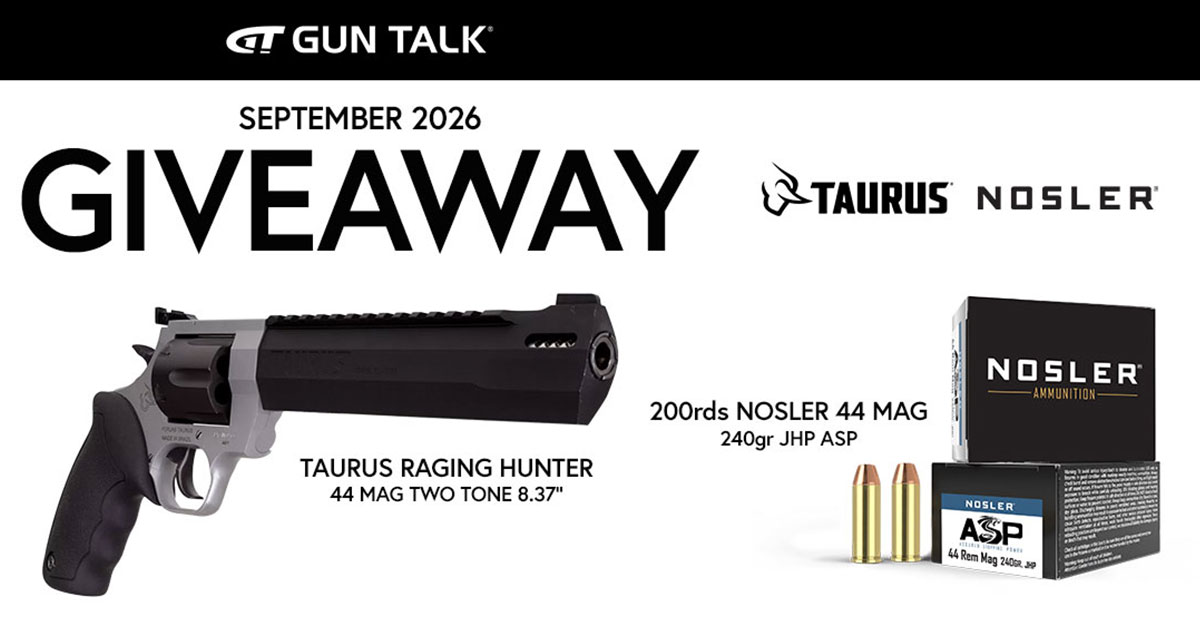
Gun Talk Giveaway
One lucky winner will bring home:
Open to U.S. residents 21+ only. Void where prohibited.