October 9, 2026
Gun Talk Staff
Gun Talk Media Staff — October 9, 2026
➡️ATF has published an Open Letter and FAQ on NFA transfers of short-barreled rifles, short-barreled shotguns, suppressors (silencers), and “any other weapons.”
— ATF HQ (@ATFHQ) October 9, 2026
➡️Still required: 4473s, NICS checks, compliance with state/local laws, and Form 20s for interstate transport of SBRs/SBSs.
More at https://t.co/Es3brUq6RA.
Today, ATF released an Open Letter and companion FAQ explaining how it will treat the National Firearms Act items whose making and transfer taxes Congress zeroed out in the One Big Beautiful Bill. Under the guidance, ATF will not enforce the requirement to apply for and receive ATF approval before making or transferring short-barreled rifles, short-barreled shotguns, suppressors and “any other weapons.” It also will not enforce the NFA's registration, tax-stamp or related requirements for those items. The policy applies to everyone, not only the parties to a lawsuit.
The $200 tax and the full NFA regime remain in place for machine guns and destructive devices, and nothing in the letter supersedes state or local law.
The policy follows Silencer Shop Foundation v. ATF, consolidated with Jensen v. ATF, in the U.S. District Court for the Northern District of Texas. On August 5, 2026, Judge James Wesley Hendrix entered final judgment, reasoning that once Congress cut the making and transfer taxes on these items to $0, the NFA's registration and pre-approval scheme could no longer rest on the taxing power. The Justice Department chose not to appeal.
The injunction itself protects only the plaintiffs and certain related parties, including members and customers of several plaintiff organizations such as Gun Owners of America. Other courts aren't bound by it. ATF says it is using enforcement discretion to extend the practical effect to everyone, citing the “inequity and disuniformity” of a party-limited order.
| Topic | Status as of October 9, 2026 |
|---|---|
| Machine guns and destructive devices | Still taxed at $200 and fully regulated under the NFA. |
| Dealer special occupational tax (SOT) | FFLs engaged in NFA business must still pay for and hold their SOT. |
| Gun Control Act rules | Form 4473, NICS checks, recordkeeping and prohibited-person rules apply in full to suppressors, SBRs, SBSs and AOWs. |
| SBR/SBS interstate transport | Individuals must still file Form 20 before taking an SBR or SBS across state lines (18 U.S.C. § 922(a)(4)). |
| Dealer sales of SBRs/SBSs | 18 U.S.C. § 922(b)(4) still requires federal authorization. ATF is writing rules and forms and will not enforce the provision in the interim. |
| State and local law | Not superseded. States that require NFA registration or ban these items still do. |
| Voluntary registration | ATF will keep accepting Forms 1, 2, 3 and 4 and keep the registry. |
Federally, ATF no longer requires you to wait for approval, pay a stamp or register a suppressor, SBR, SBS or AOW you make or buy. You still go through the same dealer process as any other firearm purchase: a Form 4473 and a NICS check, and the usual rules about residency and prohibited persons.
The state you live in matters more than it ever has. Most states that allow NFA items tie legality to federal lawfulness or NFA registration. ATF says it will not tell you whether an item acquired under this policy satisfies your state's standard. A minority of states ban most or all NFA items, and neither the court order nor ATF's policy changes that. If your state requires NFA registration, you still need to register.
If you want the safety net, you can still file a Form 1 or Form 4 voluntarily. Silencer manufacturers should also review the FAQ's notes on ITAR registration with the State Department.
Suppressors and AOWs are the simplest cases. SBRs and SBSs have two extra wrinkles. First, an individual still needs an approved Form 20 before moving one across state lines. Second, dealers still can't sell them without federal authorization under § 922(b)(4). Until ATF finishes the rules and forms to authorize FFLs to transfer SBRs and SBSs under the Gun Control Act, it says it won't enforce that provision, which is what allows transfers to proceed in the meantime.
Judge Hendrix said he would have issued a nationwide injunction but for the Supreme Court's decision in Trump v. CASA. That limit is why ATF's policy matters: it extends the effect without a court order. Expect follow-up on the plaintiff states' motion over the injunction's reach — DOJ's response is due October 12 — and on ATF's work to create an authorization process for SBR and SBS dealer transfers.
For now, the practical message is the same one ATF itself gave: read the FAQ, check your state's law, and don't assume the headline covers your situation.
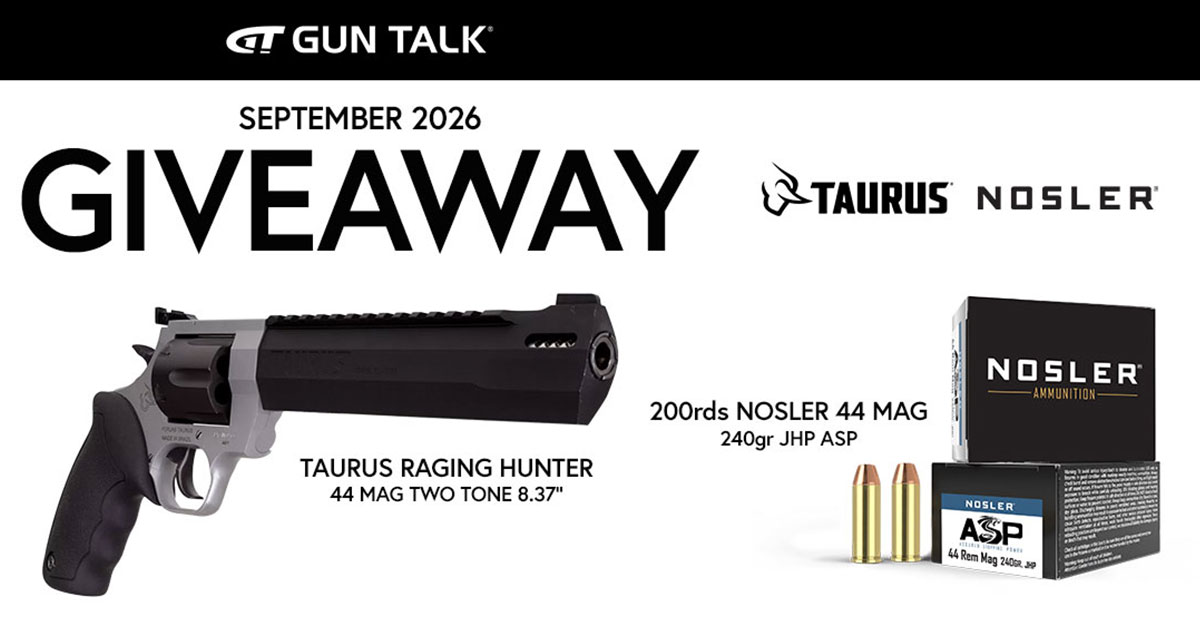
Gun Talk Giveaway
One lucky winner will bring home:
Open to U.S. residents 21+ only. Void where prohibited.