October 8, 2026
Gun Talk Staff
Angela works for the Buckeye Firearms Association, a grassroots organization in Ohio that works closely with legislators on gun rights, and she carries every day. She's been a friend and collaborator of the show for years, including force-on-force work, and the people who know her say they've never seen her nervous — until the cameras and the scenario were in front of her.
Her reason for carrying is personal. Angela was a victim of crime in her own home, when gold and diamond jewelry and some pain pills were stolen from her. That, she says, was the moment she realized she was vulnerable and decided to stay out of Condition White. She bought her first handgun, got trained, and has kept training ever since.
“A lot of people will just go out and buy a gun and they think that's enough. And it's not enough.” — Angela
Her strategy for self-defense is to avoid the situation if at all possible. Parking lots are a place where that gets tested: it's a 360-degree environment, and you don't know who anyone is. Her stated rule going in was “not my people, not my problem.” The instructors took her at her word, and said they'd push her through the bad guy if they could.
Angela is sitting in her car, waiting for someone, when a man and a woman start arguing nearby. It starts as shouting about money and groceries and escalates quickly. The man grabs the woman, strikes her, and refuses to let her leave — this is physical, violent domestic abuse, with no weapon shown.
Angela watches. She can't look away, but she doesn't get out. When a third person intervenes and gets waved off, she stays put. She's clearly uncomfortable, and at one point shakes her head with a small smirk, like she knows what the scenario is trying to do to her. She never picks up the phone.
“It's disturbing, but I don't know those people. And I'd rather be a good witness.” — Angela, in the debrief
Angela did exactly what she said she would. She also admitted afterward that she should have at least called 911, with a description of the vehicle, the man and the woman. Asked what would have gotten her out of the car, she said children being present might have. A weapon might have, too.
The instructors didn't try to talk her out of her rule. They pushed on it instead. If you decide not to get involved, ask yourself what it would cost you to pick up the phone and tell 911 what you're seeing. Documenting it, filming it, and giving dispatch a vehicle description are all things a good witness can do from behind the wheel.
Between scenarios, the instructors asked the question that sits behind the whole episode: what if she had to get involved? Not every situation will let you stay in the car, and some of your decisions might need to include a precise shot.
The coaching was practical. Shooting at a moving target with an innocent person in the way is a problem. Closing the distance, within reason, lets you guarantee your shot placement. Move with your toes pointed in the direction you're traveling, lower your center of gravity, and give clear verbal commands — “let her go” — while putting hits in the A zone. The instructor was also blunt about why you wouldn't simply press the gun against the attacker for a contact shot: if he has a knife, you've put your leg or arm right in its path.
Angela ran it slowly and methodically on the static target. The takeaway was that a real, dynamic scene doesn't give you that time, with two people moving on the ground and one of them screaming for help. In that case, one or two shots that stop the action may be all you need. The goal is to stop the threat, not to count rounds.
The episode also walks through a drill for finding out what you're actually capable of with your carry gun. Using a Ruger LCP Max (the Magpul Edition, with a slightly larger grip), the shooter starts at 10 feet and works backward — 15, then 20, then 30 — a walk-back drill that bumps the target a little further each time. Somewhere around 15 feet, precision on the smallest target started to slip, and by 30 feet, well outside normal gunfight distances for a .380, a shot went wild.
That's the point. You don't need to draw from the holster to do it, and you can do it at an indoor or outdoor range. You're building confidence in your carry gun and learning where your limits are, because if you don't have to close the distance on a bad guy, you shouldn't have to get any closer than you need to. Know your limits.
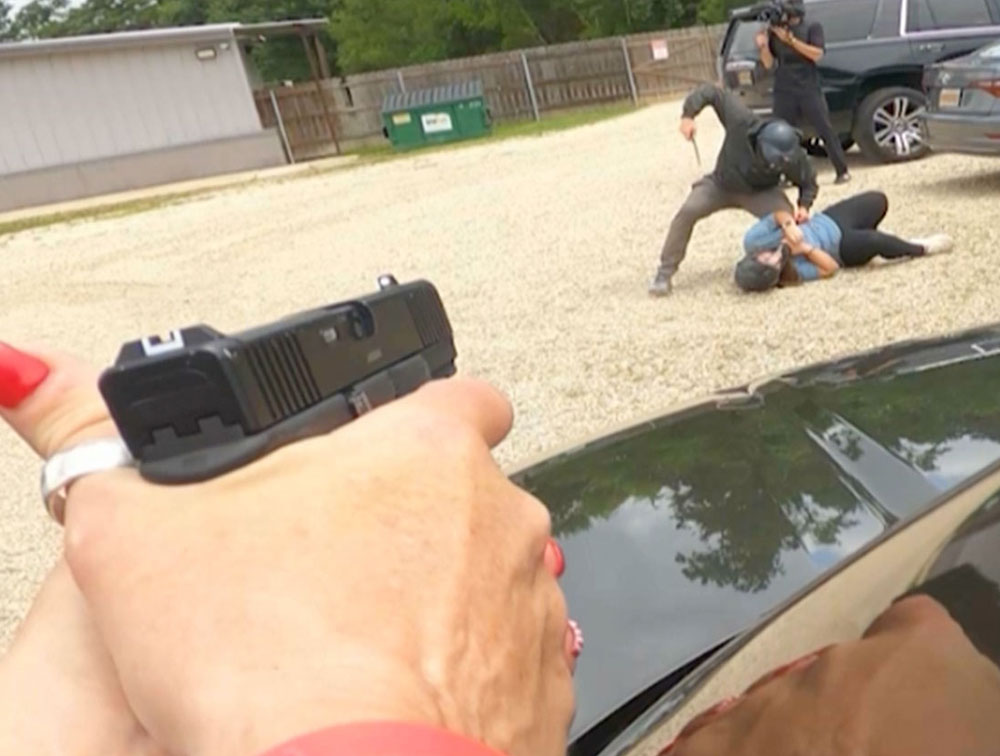
Angela walks to her car knowing the second scenario will be “the same but different.” A man and a woman are in a car nearby, and there are other distractions in the lot. Then the argument turns. The man says there will be consequences, and this is the day they come. Angela hears a commotion she can't quite read, until she sees what's on the camera feed — a knife in his hand, and the woman is being stabbed.
This time, she doesn't hesitate. She gets out of the car, puts her sights on the target, and gets hits. He's standing over the woman, so she doesn't need to close the distance. She fires a reasonable number of rounds, and when he keeps advancing without dropping the knife, she fires again. She stays on him until he goes all the way down, with her head up, then calls 911 and reports a woman with multiple stab wounds.
“Not my people, not my problem, but then all of a sudden it's attempted murder. Does that change things?” — First Person Defender instructor
Once Angela saw the woman bleeding and then saw the knife, she says, she knew it was time to engage. The instructors had expected her to stay a witness — one admitted he was worried she wouldn't act at all. They were also clear that nothing about her first answer was wrong; it was a decision based on what she knew then. A knife changed what she knew.
She credited her training. Angela said she tells friends who haven't experienced anything like this to seek out the same kind of work, because your body can't go where your mind hasn't already been. And you don't rise to the occasion — you fall to your level of training.
What makes this episode worth watching is that Angela isn't a cautionary tale in either direction. In the first scenario she did what she said she would, and thought it through. In the second, she changed her answer when the facts changed. That's what training, and a few honest conversations with yourself, are supposed to produce. First Person Defender exists to give people that experience before the real thing does.
Watch the full episode above, and if you've ever wondered what you'd actually do in a self-defense situation, First Person Defender is looking for its next guest — email KG at guntalk.com for more information.
Gun Talk's First Person Defender puts regular people into force-on-force self-defense scenarios. Putting you inside the fight to defend your life or the lives of your loved ones, First Person Defender shows you what can go wrong…and how fast it can happen.
First Person Defender Season 15 is brought to you by Colt, CZ Firearms, HK-USA, Ruger, Safariland, Shooting Sports Life, and VIKTOS.
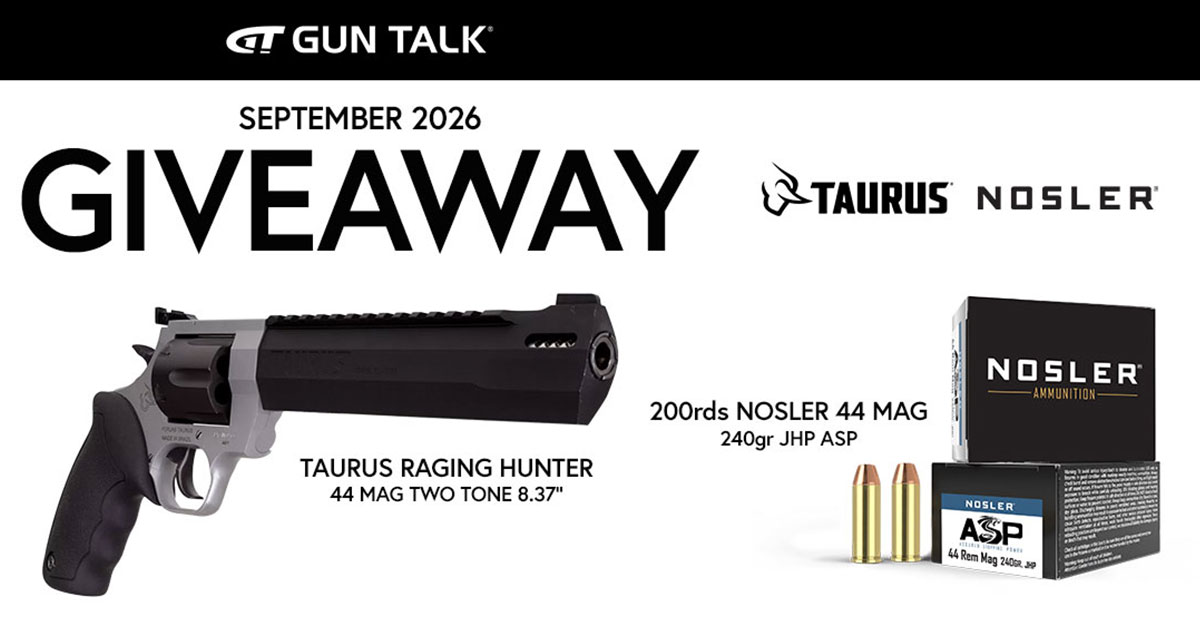
Gun Talk Giveaway
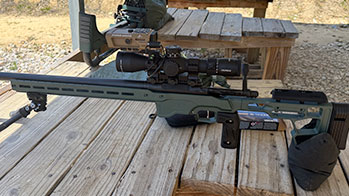
One lucky winner will bring home:
Open to U.S. residents 21+ only. Void where prohibited.