July 15, 2026
For a guy from Minnesota, an invitation to head south to Oklahoma in late March and early April is not a difficult decision. Back home, winter doesn’t release its grip without a fight. The mud is deep, the sky is gray, and the calendar insists it’s spring while the thermometer respectfully disagrees. Heading south to cattle country — real cattle country, the kind with working ranches and wide open skies — felt less like a media event and more like parole.
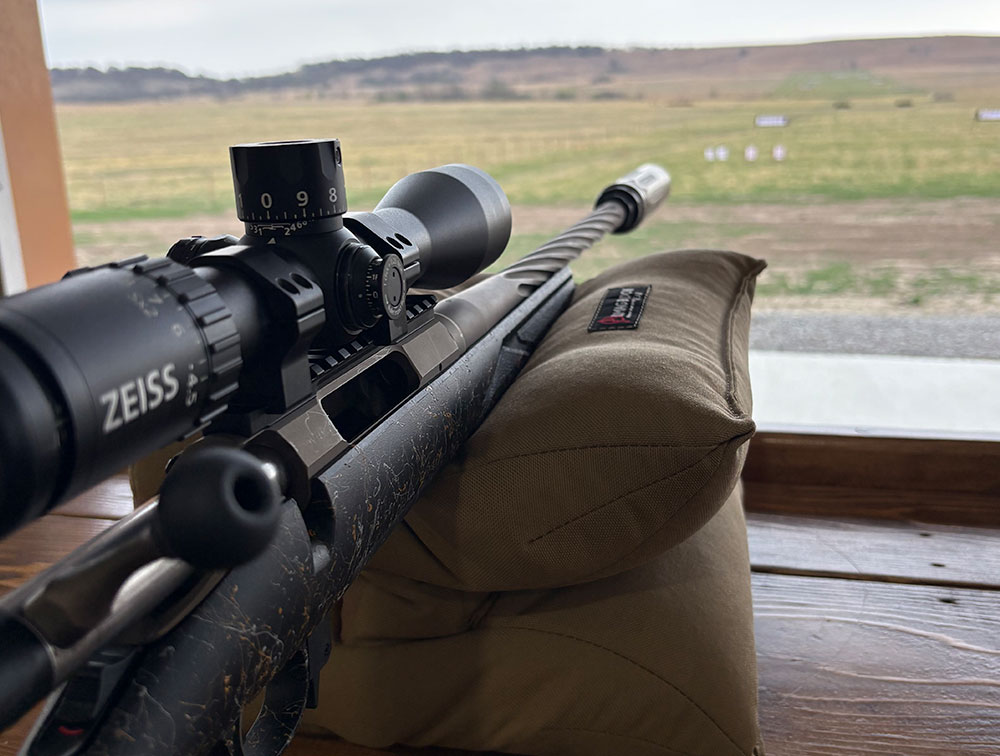
Zeiss had assembled a group of shooters at the Cross Bell Ranch near Copan, Okla., for two days of glass evaluation and long-range shooting. The 80-degree sunshine and Oklahoma wind that greeted us on arrival were welcome enough. But the setting itself was the kind of place that warrants its own paragraph.
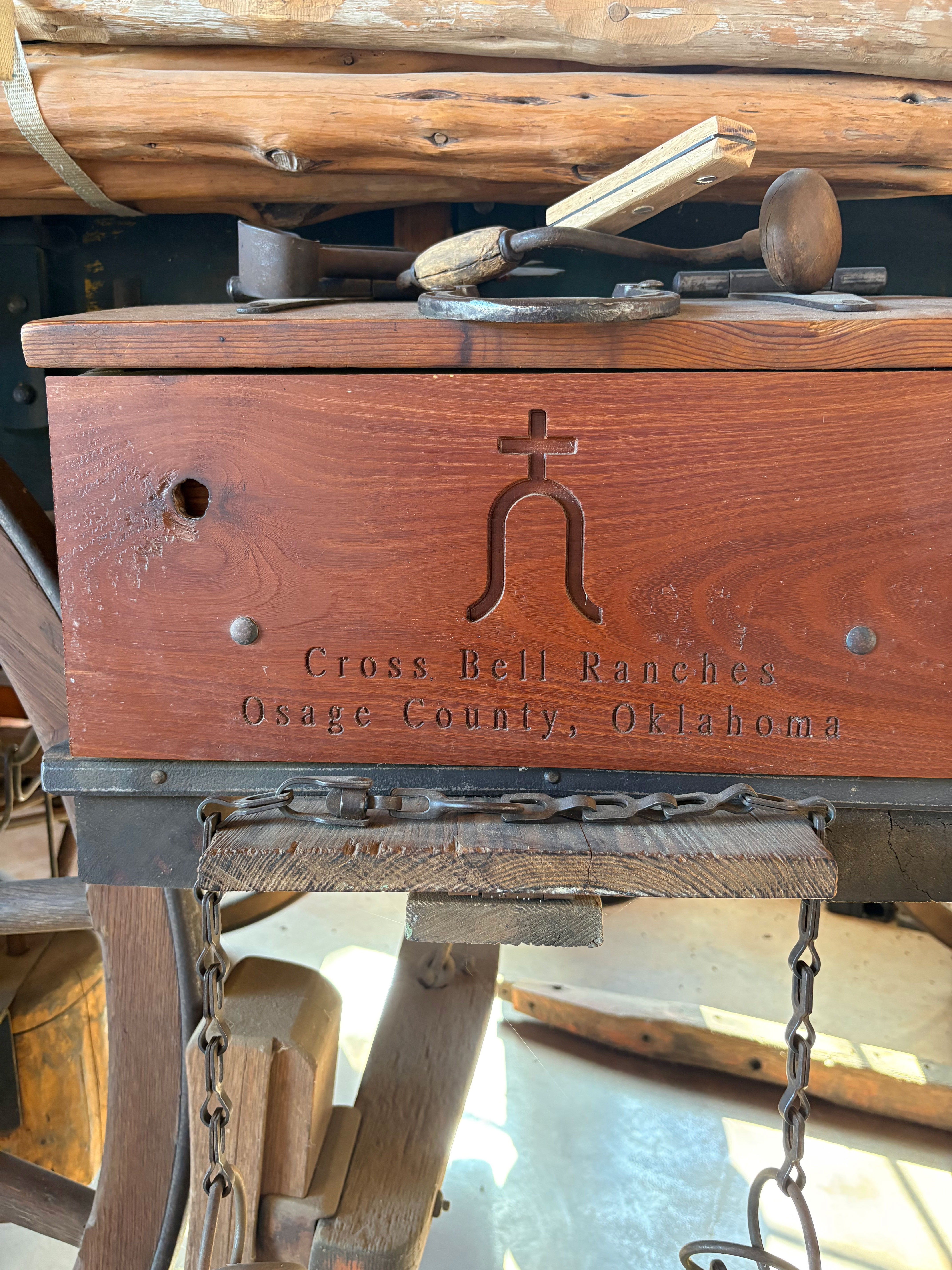
The Cross Bell Ranch traces its history back more than a century of continuous working cattle operation. At its peak, the property stretched more than 100,000 acres. Today, 54,000 of those original acres remain intact — a working cattle ranch in every sense, supplemented by roughly 6,000 head of goats deployed to manage underbrush along creek beds and unused pasture. The ranch also serves as a foster property for the federal government, housing more than 10,000 wild horses removed from Bureau of Land Management land each year. Twelve dogs run the property. They look approachable enough — until a coyote sounds off somewhere in the distance, at which point you learn quickly to step aside.
It was an evocative backdrop for an optics launch. The kind of place that reminds you why glass matters.
Zeiss assembled a deliberate mix of attendees. Many were seasoned western hunters — guides, writers, and content creators who routinely engage big game at 350 to 450 yards as a matter of course, for whom a shot at 400 yards on a mule deer is Tuesday, not an achievement. I came at it from the other direction, representing the Midwest whitetail perspective: a hunter for whom 150 yards is a long shot and the timber doesn’t give you much choice either way.
That range of experience turned out to be one of the most useful aspects of the event. The western hunters evaluated the V3 line through one lens — does it have the reach and clarity my hunting demands? I evaluated it through another — does this solve my actual problem, which is one optic that can move from a Minnesota Northwoods deer stand to a Wyoming antelope flat without requiring me to buy a second rifle setup?
Instruction on the firing line came from the team at Outdoor Solutions, which meant that 1,000-yard steel was on the menu. I knew going in that was likely. What I didn’t fully anticipate was how meaningful the lower-power options would be at those distances — more on that shortly.
Zeiss builds the V line. Those familiar with the brand know the V8 and V6 as the premium expression of that philosophy — flagship variable optics with price tags to match. The V4, in the Conquest configuration, occupies the mid-range of the family. The new V3 represents something different: a deliberate, well-considered entry point designed for the hunter who wants to step into the Zeiss family without stepping into the V6 or V8 budget.
Zeiss was direct about what that means and what it doesn’t. The V3’s internal components are not the same as what you find in the V8 or V6. No one at the event suggested otherwise, and the company deserves credit for that transparency. What Zeiss did claim — and what the two days on the Cross Bell Ranch bore out — is that the V3 delivers the optical experience expected of the Zeiss name at a price point that makes the brand accessible to a significantly broader audience.
“The guts of the V3 are not the V8 or V6. But they stand tall for the price point — and in the field, that’s what actually matters.” — Matt Johnson, Gun Talk Media
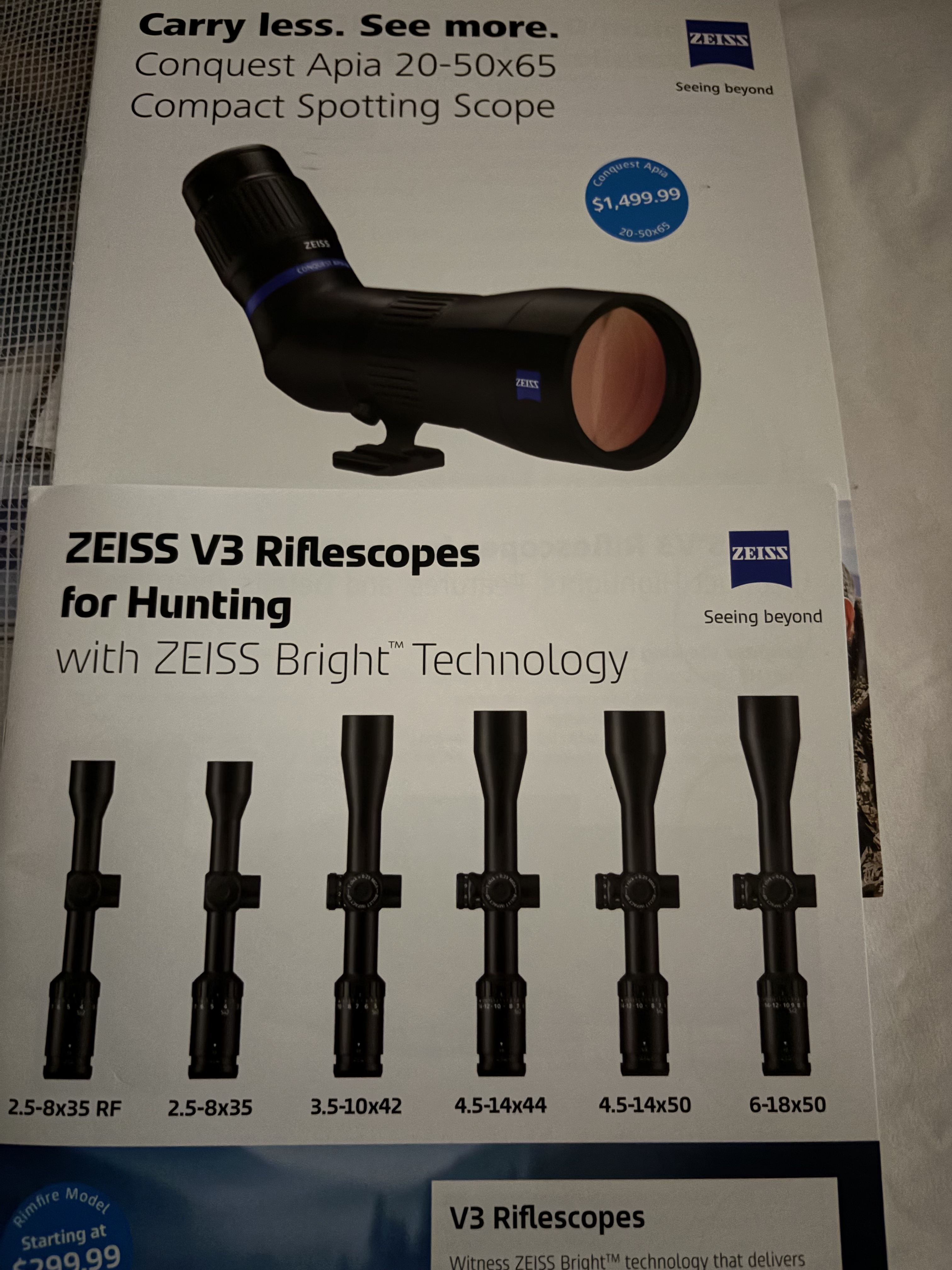
The V3 line spans a meaningful range of configurations, from a 2.5-8x35 low-power variable — including a dedicated rimfire version — all the way up to a 6-18x50 at the top end, with multiple variants in between. Available features across the lineup include illuminated reticles, fixed or infinity parallax settings, extended range reticles, and a zero-lock function. The rimfire version of the 2.5-8x35 carries a retail price in the vicinity of $300, which positions it as an exceptional value for rimfire target shooters, muzzleloader hunters, and slug gun users who want legitimate Zeiss glass without the premium price.
| 2.5-8x35 | Low-power variable │ Rimfire version available (~$300 retail) │ Compatible with rimfire, muzzleloader, shotgun │ Built to withstand full-cartridge recoil |
|---|---|
| 3.5-10x42 | Sweet spot for versatility │ Group consensus pick for hunting crossover use │ 500-yard capable in evaluation │ Illuminated reticle available |
| 4.5-14x44 | Extended mid-range │ Recommended for whitetail-to-western crossover hunters │ Practical everyday field option |
| 4.5-14x50 | NRL entry-level recommendation │ More features, expanded adjustments │ Comparable price to entry-level competition rifles |
| 6-18x50 | Top of the V3 lineup │ Extended range capability │ Full feature set |
| Features | Illuminated reticles │ Fixed or infinity parallax │ Extended range reticles │ Zero lock │ Picatinny rail compatible |
A group of proven long-range shooters gathered at a ranch with access to steel at 1,000 yards, and the unanimous praise went to the low-power variable optics. That’s not an accident. It’s actually the most instructive takeaway from the event.
The 2.5-8x and 3.5-10x configurations generated the most conversation, the most enthusiasm, and the most honest admission from experienced hunters that their real-world shooting rarely demands more magnification than those ranges provide. Jace Bauserman, a well-known hunting writer and content creator who attended the event, articulated it clearly. Those low-power configurations give him greater field of view and allow him to maximize the brightness that has always been the Zeiss signature. Bauserman is the kind of hunter who works tight on game — for him, close is inside 400 yards, and the wider FOV of a low-power variable in that range is an asset, not a compromise.
The 3.5-10x42 was the model that generated the clearest consensus. From the evaluation on the Cross Bell Ranch, that configuration proved capable of routinely making hits on steel at 500 yards — more than sufficient for any whitetail, mule deer, pronghorn, or elk scenario a Midwest or western hunter is likely to encounter. It runs clean in the Northwoods of Minnesota. It runs clean on the wide-open ridges of the West. And it does so at a price and weight that doesn’t require a dedicated western rifle build.
“The 3.5-10x42 was enough to routinely hit 500-yard targets. For a guy hunting MN Northwoods or Midwest field edges — or taking a western trip — that’s more than enough glass to get the job done.” — Matt Johnson, Gun Talk Media
The group’s western hunters added their own perspectives. Sean, an Arizona-based hunter and NRL competitor, noted the consistent tolerance across his DOPE — a critical quality for competitive shooters, for whom adjustment repeatability isn’t an abstract specification but a match-deciding variable. He was impressed by the ability to take a 10-power duplex out to 1,000 yards effectively, and noted that the V3 broke his expectation of what a moderately priced optic from a premium brand would deliver.
Andrew, who hunts primarily in Montana, Wyoming, and Utah and specializes in spot-and-stalk hunting at closer distances — pronghorn around 200 yards, elk and mule deer inside 400 — praised the V3’s expansive field of view and the clarity it delivered at those practical hunting ranges. He also called out the tightness and consistency of the adjustments as standout qualities.
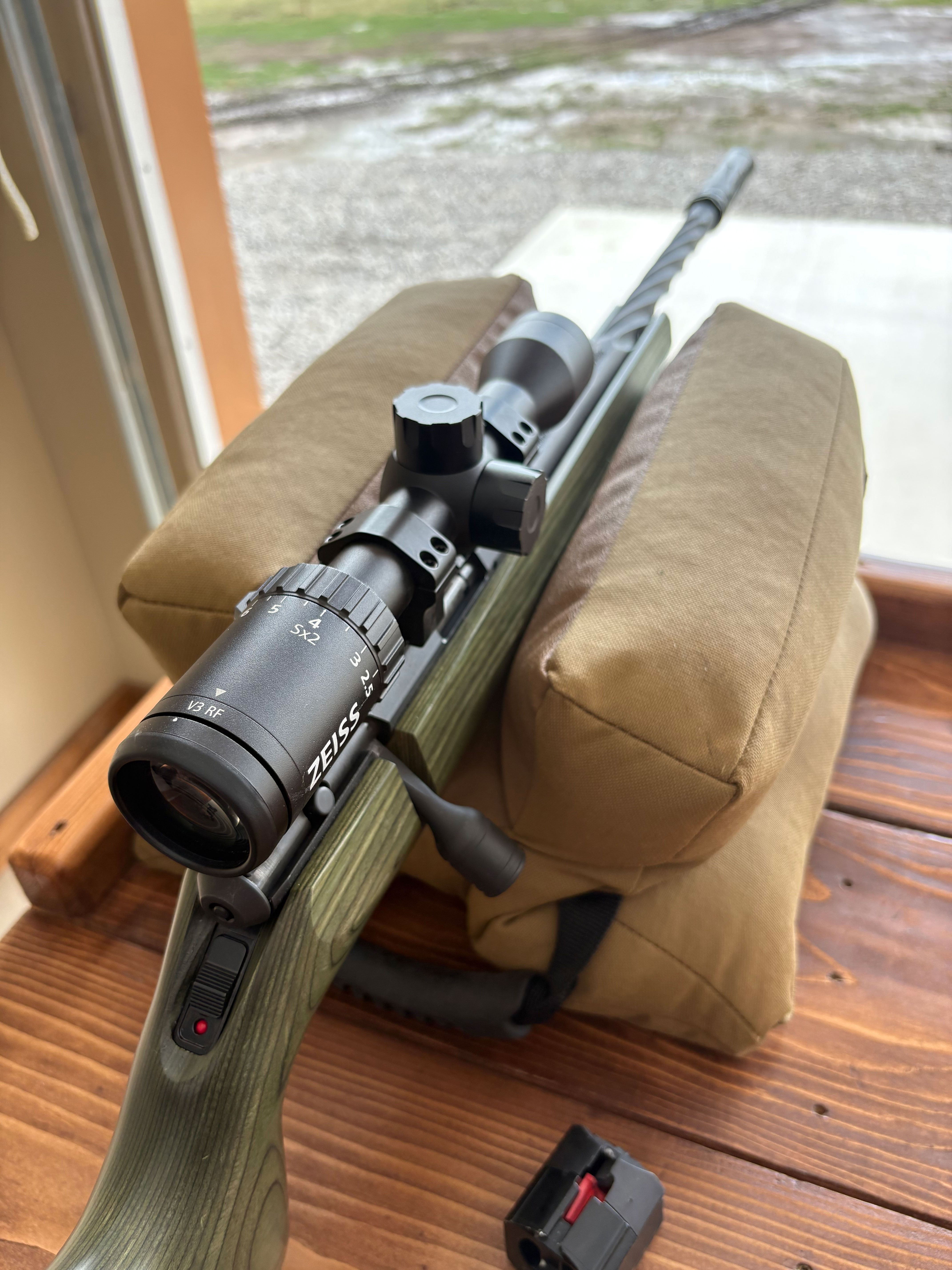
The first day centered on comparative evaluation, with the V3 models positioned alongside other popular optics in similar configurations and price ranges for direct side-by-side assessment. Attendees evaluated clarity, field of view, light transmission, and reticle quality in real time, including a dedicated session at dusk designed to simulate the conditions hunters actually encounter — that critical 20-minute window at the end of legal shooting light when the shot either happens or it doesn’t.
The dusk session was particularly revealing. Zeiss has built its reputation in part on low-light optical performance, and the V3 line carried that standard. For a whitetail hunter who has stood in a stand at last light waiting for a buck to step out, the ability of an optic to gather and transmit light in those conditions is not a talking point. It is the entire conversation.
Day two moved out onto the rolling terrain of the Cross Bell for the shooting evaluation. All rifles at the event were chambered in 6.5 Creedmoor — Tikka T3 Tactical and Ruger American Gen II platforms — fed with Federal Premium 140-grain ammunition. A whitetail hunter’s standard setup, applied to targets that tested the limits of a Midwest shooter’s experience in the most honest way possible.
Steel targets in animal shapes ranged from 430 yards out to approximately 800 yards, with an additional pronghorn silhouette positioned at a water hole at 125 yards, requiring an off-hand shot downhill. The full spectrum of practical hunting scenarios, laid out on Oklahoma terrain.
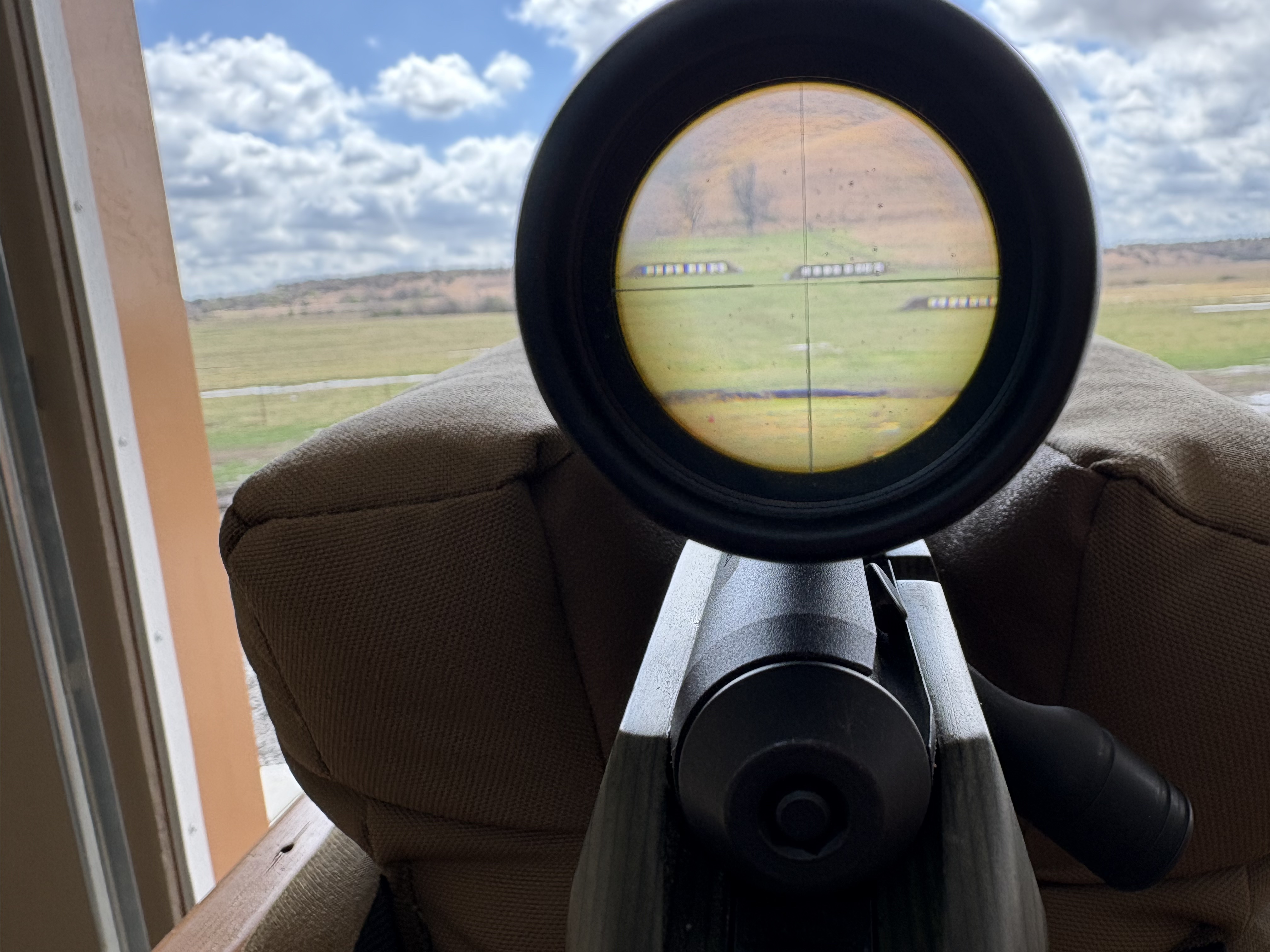
The experienced western hunters in the group made it look straightforward. Hit after hit, consistent and confident, using the same V3-equipped 6.5 Creedmoor setup I was running. The operator at the other end of the rifle matters, and by my own admission is worth reprinting here exactly as he said it: in the real-world scenario of that off-hand, downhill, 125-yard pronghorn shot, the inexperience showed. The equipment performed. The scope was not the variable.
That conclusion — the optic performs, the operator is the limiting factor — is one of the most honest assessments a gear reviewer can offer, and it is ultimately the highest compliment the Zeiss V3 could receive in a field evaluation.
The Zeiss V3 was designed with a specific hunter in mind — and Zeiss was honest about that at the event. It is the first step into the Zeiss family for eastern whitetail hunters. That framing is accurate, but it undersells the line’s practical versatility.
Consider the scenario that resonates most clearly for a Midwest hunter: years of whitetail hunting from a stand in the timber, effective shots inside 150 yards, one solid deer rifle set up for that. Then comes a pronghorn opportunity in Wyoming. Then, eventually, an elk or moose tag drawn after years on the waiting list. The question is whether to build a dedicated western setup — another rifle, another optic, another investment — or whether one system can do it all.
In today’s ammunition and rifle market, the answer is increasingly one system. Modern cartridge options give a standard short-action rifle legitimate reach. Modern optics technology gives a variable scope the low-end clarity for timber work and the top-end magnification for open country. The V3 line — specifically the 3.5-10x42 and 4.5-14x44 variants — sits squarely in that crossover role. Mount it on a 6.5 Creedmoor, learn your drops with Federal Premium, and you have a system that is competitive from a Minnesota food plot to a Wyoming pronghorn flat.
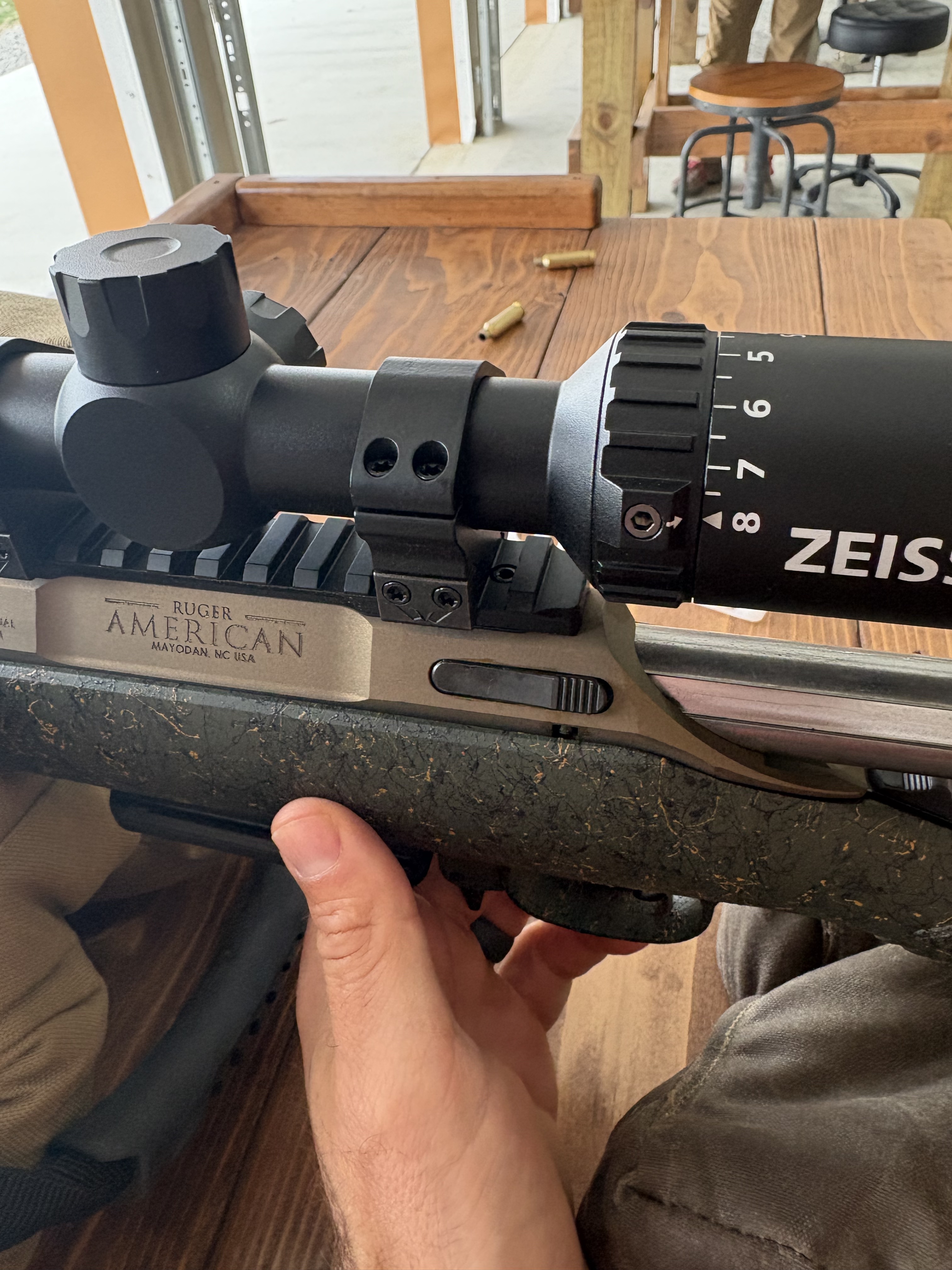
Or, for the shooter who runs a Picatinny rail, the swap is even simpler: one rifle, two optics, set up for the specific hunt. The V3’s zero-lock function makes that workflow cleaner.
For shooters looking to step into NRL Hunter or similar precision field competitions without making a five-figure gear investment, the 4.5-14x50 stands out as the specific V3 recommendation from the event.
The math is straightforward. A Ruger American Gen II or Tikka T3 in 6.5 Creedmoor runs in the $700-to-$900 range depending on configuration. The V3 4.5-14x50, with its extended feature set — illuminated reticle, extended range reticle, zero lock — slots in at a price point comparable to the rifle itself. The complete system — rifle, optic, quality rings, Federal Premium ammunition — lands in the vicinity of $2,000 total. That is a fraction of what a purpose-built top-tier NRL competition rig costs.
The key qualifier is that you will be competitive from the start with this setup. Not winning outright at the highest levels — that takes equipment and time behind it that $2,000 doesn’t buy — but competitive. Making hits. Learning the game. Building the skill set that eventually separates shooters at any price point. The Zeiss V3 doesn’t limit that development.
Two days on a 100-year-old Oklahoma cattle ranch, in the hands of hunters ranging from long-range competition veterans to Midwest whitetail specialists, the Zeiss V3 line proved its concept. It is not the V8. It is not trying to be. What it is — a well-built, optically honest, versatile variable scope at a price point that opens the Zeiss name to a much wider audience — it does with conviction.
The low-power models, the 2.5-8x and 3.5-10x in particular, earned the loudest praise from a group that could have chosen to dismiss them. The reason they didn’t is worth remembering: these are hunters who know exactly what distances they actually shoot at, and they recognized that the V3’s low-power configurations serve those real-world hunting scenarios exceptionally well.
The rimfire version of the 2.5-8x35 at approximately $300 retail deserves specific mention as an outstanding value in a standalone category — it works as a quality rimfire optic, a muzzleloader scope, or a shotgun optic, with construction robust enough to handle the recoil demands of all three.
For the hunter who has long considered Zeiss out of reach — the Midwest whitetail guy who finally drew that elk tag, the new precision shooter who wants to compete without a second mortgage — the V3 is the answer that Zeiss has been owing that customer for a long time. It delivers.
“If asked to take one optic from Midwest whitetails to western mule deer and elk — I have no problem recommending the Zeiss V3 line. The 3.5-10x42 and 4.5-14x44 are in the sweet spot of cost, practical field use and features.” — Matt Johnson, Gun Talk Media
Full details, pricing and availability at zeiss.com/hunting.
| Sean (Arizona) | NRL competitor and western hunter. Praised consistent adjustment tolerance across DOPE — a match-critical quality. Impressed by the ability to run a 10x duplex out to 1,000 yards. Said the V3 broke his expectation of what a mid-priced premium-brand optic would deliver. Noted it allows a hunter to be prepared for the chance shot at longer-than-expected distances. |
|---|---|
| Andrew (Montana) | Spot-and-stalk hunter — antelope at 200 yards, elk/mule deer inside 400. Appreciated the expansive field of view and clarity across practical hunting distances. Called out the tightness and consistency of adjustments as standout characteristics. |
| Jace Bauserman | Hunting writer and bowhunter-crossover. Specifically praised the low-power configurations for maximizing Zeiss brightness and field of view. Noted the V3 lets him hunt rifle the way he hunts bow — tight and purposeful. |
| Group consensus | Low-power configurations (2.5-8x and 3.5-10x) generated the most enthusiasm across a group of shooters with proven long-range capability. The admission: real-world hunting demands rarely exceed what those configurations deliver. |
Matt Johnson is a field correspondent for Gun Talk Media and contributing producer for the Guns & Gear show on the Shooting Sports Life Network. A hunter of nearly 40 years with deep roots in Midwest whitetail hunting, Matt attended the Zeiss V3 media event at the Cross Bell Ranch in Copan, Okla., in April 2026. He brings a practical, real-world perspective to gear evaluation that reflects the experience of the majority of American hunters.


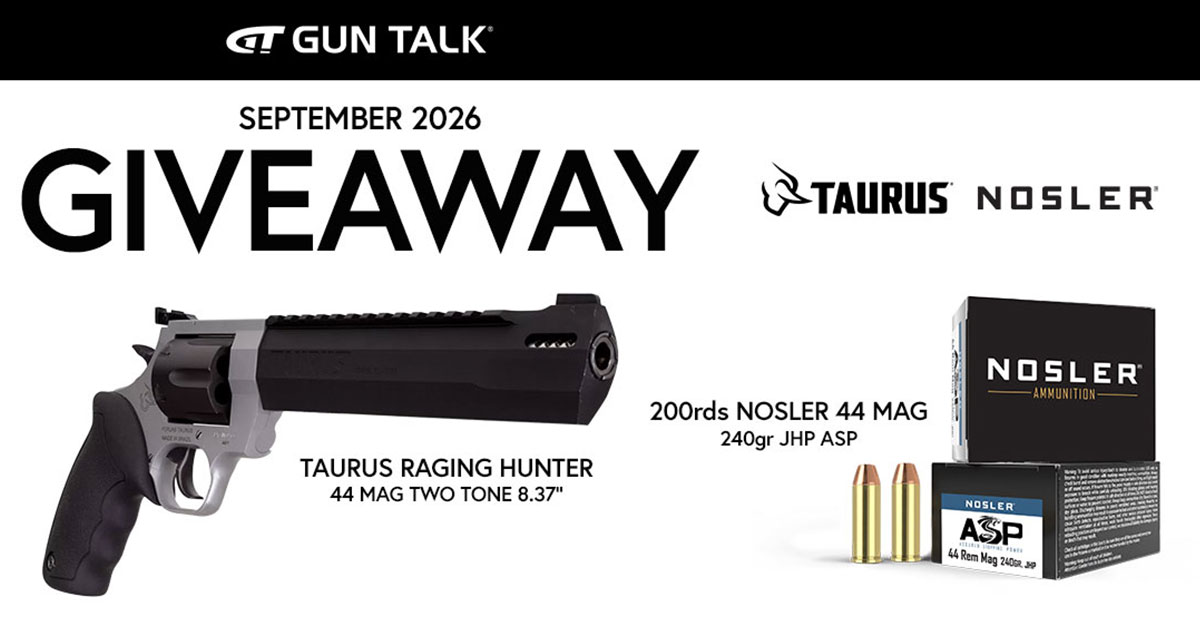
Gun Talk Giveaway
One lucky winner will bring home:
Open to U.S. residents 21+ only. Void where prohibited.