
Gun Talk November Giveaway
Two winners this month.
- CZ Duty F4.0Manual safety
- Black Hills MK262 MOD 1-C460 rounds, 77gr 5.56mm
Two winners. Must be 21+ to enter. Void where restricted.
Gun Talk November Giveaway
Two winners. Must be 21+ to enter. Void where restricted.
November 2, 2026
Gun Talk Staff
Gun Talk Media Staff — November 2, 2026
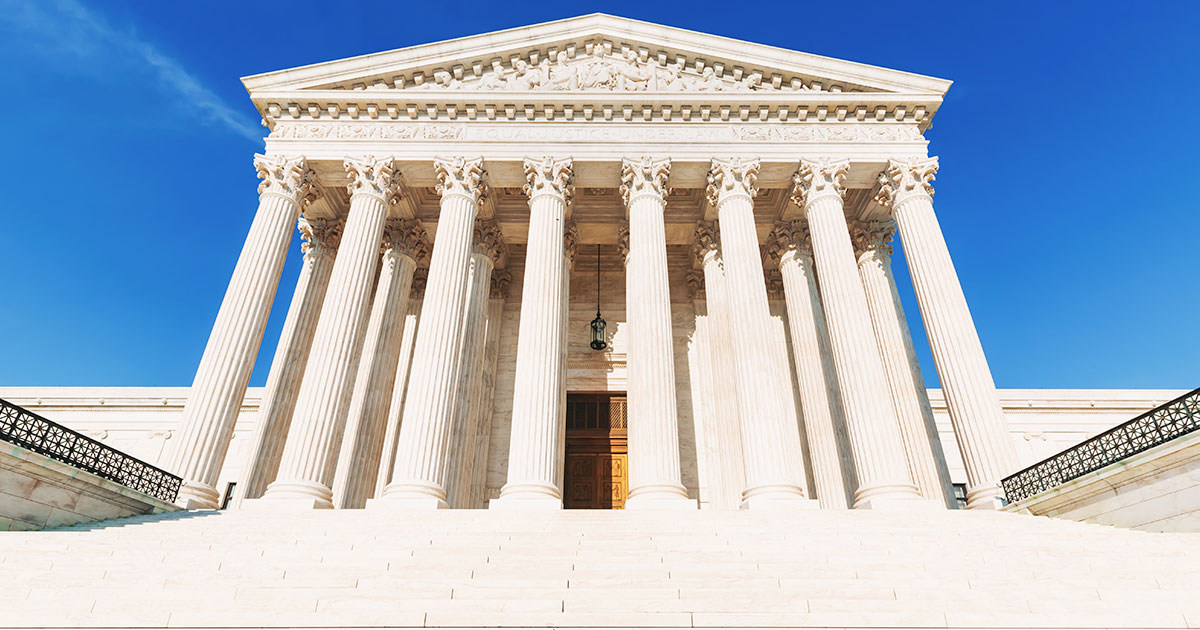
On October 28, two groups supporting the AR-15 bans filed amicus briefs in Viramontes v. Cook County (No. 25-238) and Grant v. Higgins (No. 25-566) that go further than defending the laws. Americans Against Gun Violence and the American Enlightenment Project both ask the Supreme Court to reconsider District of Columbia v. Heller (2008), the decision that recognized the Second Amendment as an individual right.
Americans Against Gun Violence argues that England’s gun laws show the Founders did not inherit a broad individual right to own firearms, and it asks the Court to rule that civilian ownership of AR-15s is not constitutionally protected and that Heller was wrongly decided. The American Enlightenment Project, in a brief by co-founder Robert Ludwig, argues that Heller “magnifies the predictable consequences of anger, passion, intoxication, and impaired impulse control.”
“Heller and its progeny are egregiously flawed decisions.” — Americans Against Gun Violence, amicus brief supporting the bans
This is not a new argument. Heller itself rejected the claim that the right belongs only to militias, and the Court reaffirmed it in McDonald v. City of Chicago (2010) and New York State Rifle & Pistol Association v. Bruen (2022). What stands out is where the argument is being made: in the biggest Second Amendment case in years, with argument set for December 2.
Heller held, 5–4, that the Second Amendment protects an individual right to keep and bear arms, not one tied to militia service, and applied it to handguns in the home for self-defense. McDonald applied the right to state and local governments. Bruen added the test that gun laws must fit the nation’s historical tradition of firearm regulation. Overturning Heller would take at least five justices explicitly voting to do so, and it would pull the foundation out from under the modern Second Amendment framework that both later decisions build on.
The ask in these two briefs is very different from the question the Court actually took. The question presented is whether the Constitution protects AR-15-platform and similar semiautomatic rifles. About 45 briefs were filed supporting the petitioners in the first round, including one from Tennessee and 26 other states, and Cook County and Connecticut filed their own merits briefs defending the bans on October 21. Whatever the two Heller briefs accomplish, the Court will have to answer the AR-15 question in front of it.
On Tuesday, November 3, Massachusetts voters decide Question 9, a referendum on Chapter 135 of the Acts of 2024, the gun law Gov. Maura Healey signed on July 25, 2024. A YES vote keeps the law. A NO vote repeals it. Gun rights activists gathered more than 90,000 signatures to put it on the ballot. Because Healey declared the law an emergency, it took effect before the vote.
Chapter 135 does the following:
The NO side is led by the Civil Rights Coalition, the ballot committee of the Gun Owners’ Action League. Smith & Wesson Brands is its largest reported donor at $50,000. Opponents argue the law overreaches on the right to bear arms. On the YES side, Yes for a Safe Massachusetts and the Massachusetts Coalition to Prevent Gun Violence are backed by Gov. Healey, the Massachusetts AFL-CIO, AFT Massachusetts, the League of Women Voters of Massachusetts and Everytown for Gun Safety Action Fund. The Massachusetts Teachers Association gave the YES campaign $500,000.
If YES wins, the law stands. If NO wins, Chapter 135 is repealed going forward and the state returns to its prior framework, including the 1998 ban. Officials have not said how registration data or pending prosecutions under the new offenses would be handled after a repeal.
On October 13, the full Third Circuit decided United States v. Bost (No. 24-1719), upholding the federal felon-in-possession law, 18 U.S.C. § 922(g)(1), against both as-applied and facial challenges. Bost was caught with a stolen .38 pistol, and his prior conviction was for terroristic threats under Pennsylvania law. Judge Stephanos Bibas wrote the majority opinion.
The court reasoned that the historical basis for disarming people is preventing physical violence. A conviction that shows a risk of physical violence can presumptively justify disarmament without the government re-proving dangerousness in every case. A conviction that does not show that risk does not automatically justify disarmament, and the government must then offer a historically grounded justification. The ruling does not hold that everyone covered by the statute can be disarmed.
The court splintered. Judges Shwartz, Krause and Restrepo would have upheld the law for all felons. Judge Mascott would have ruled narrowly on Bost’s own violent record. Judge Montgomery-Reeves concurred in the outcome but criticized some of the historical analogues the majority relied on. Judges Phipps and Bove dissented, arguing there is no historical tradition of disarming felons after they finish their sentences. Six days later, the same court ruled en banc in a companion case that a decades-old DUI conviction did not justify continued disarmament.
| Date | What to watch |
|---|---|
| Tuesday, Nov. 3 | Massachusetts votes on Question 9. YES keeps Chapter 135, NO repeals it. |
| Wednesday, Nov. 4 | Heeter v. James: a federal judge in the Western District of New York struck down New York’s body armor purchase-and-sale restrictions on October 21 (Judge John Sinatra) and stayed the order for 14 days. It takes effect November 4 unless the state gets a longer stay. New York has 30 days from the judgment to appeal. |
| Wednesday, Nov. 4 | The Justice Department opens its federal firearm rights-restoration application to the public for the first 5,000 candidates (OMB Form #1123-0017). DOJ’s page lists the online application as “coming soon,” and says a $30 fee begins with the January 4, 2027 wave, which opens for 500 more candidates. Check justice.gov/ffrr. |
| Wednesday, Dec. 2 | Supreme Court oral argument in Viramontes and Grant. |
| January 2027 | Tentative Fifth Circuit en banc argument in Cordova. |
| June 2027 | Decision in Viramontes and Grant expected by the end of the term. |
This article reflects information available as of November 2, 2026. Gun Talk Media may update it as these stories develop.


Gun Talk Giveaway
One lucky winner will bring home:
Open to U.S. residents 21+ only. Void where prohibited.